


Home » Cork Culture
Cork Culture
Among the rocky hills and ancient forests of Alta Gallura stretch the cork oak forests, a distinctive element of the landscape and material culture of this part of Sardinia. Cork, obtained from the bark of the cork oak (Quercus suber), has been a fundamental resource for the economy and identity of the territory for centuries.
Calangianus: cork capital
Calangianus is the beating heart of this tradition, one of the most important centers in the world for cork production and processing. Located at about 500 meters above sea level, at the foot of the Limbara massif, the town is surrounded by dense cork oak forests that have always characterized its landscape and daily life.
In Calangianus, there are numerous artisanal and industrial companies specializing in cork stopper production, employing advanced technologies while maintaining a strong connection with traditional knowledge. Here, cork is not just a raw material: it’s a cultural symbol, part of a shared identity that has generated work, innovation, and territorial pride.
The Cork Museum
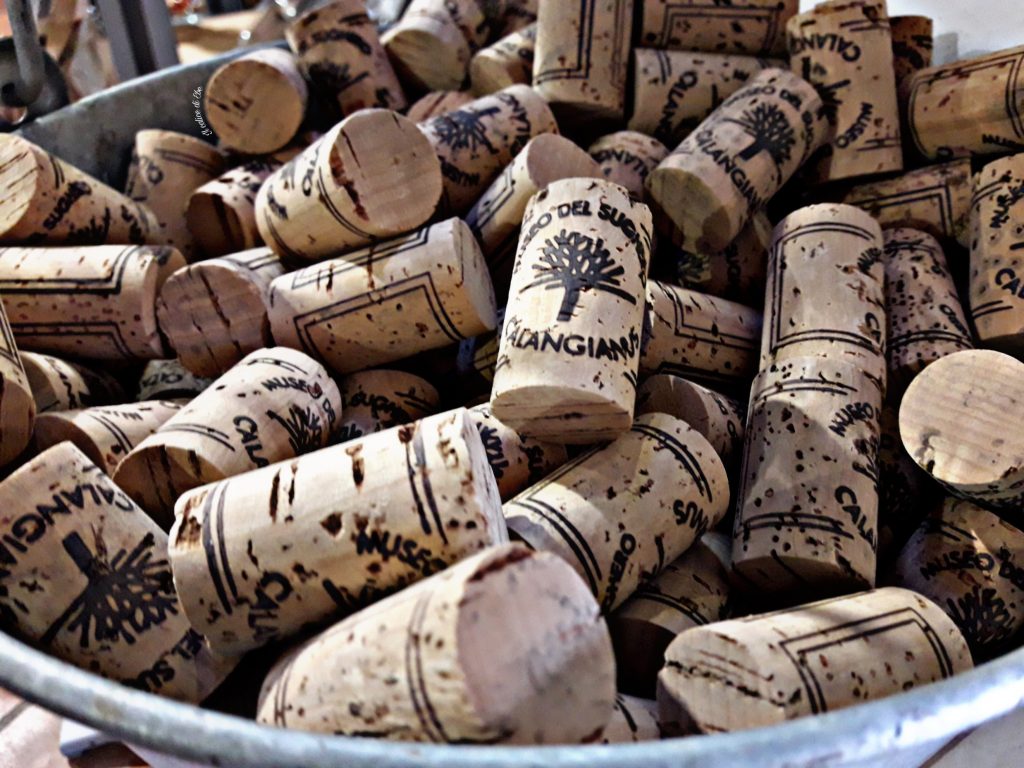
To deepen your knowledge of this millennial culture, a visit to the Cork Museum is essential. It is housed in the evocative rooms of the former Capuchin convent, dating back to the 18th century. The museum showcases all phases of the production cycle, from extraction to selection, from boiling to finishing, up to the packaging of the stoppers.
The cork culture in Alta Gallura is the result of a balance between nature, artisanal knowledge, and local economy. It’s a virtuous example of sustainability and conscious use of resources, where knowledge of the territory translates into innovation, quality, and beauty.
Cork is not just a material to be shaped, but an identity symbol.

MUSEUMS OF THE
TERRITORY

ARCHAEOLOGICAL NATURE AREAS
Nature area
Coordinates
Altitude
Area
Inhabitants
Hamlets
Patron Saint
40°55’44″N 9°03’51″E
514 m above sea level
82.44 km2
1.424
Bonaita
Saint Victoria
 e poi
e poi