19th-century Palaces of Luras

Depperu Palace

The Depperu building is located in the historic center of Luras, right in front of the 18th-century parish church of Madonna del Rosario. It is part of a group of prestigious buildings that characterize the town, expressing a wealthy class consisting mainly of landowners and merchants.
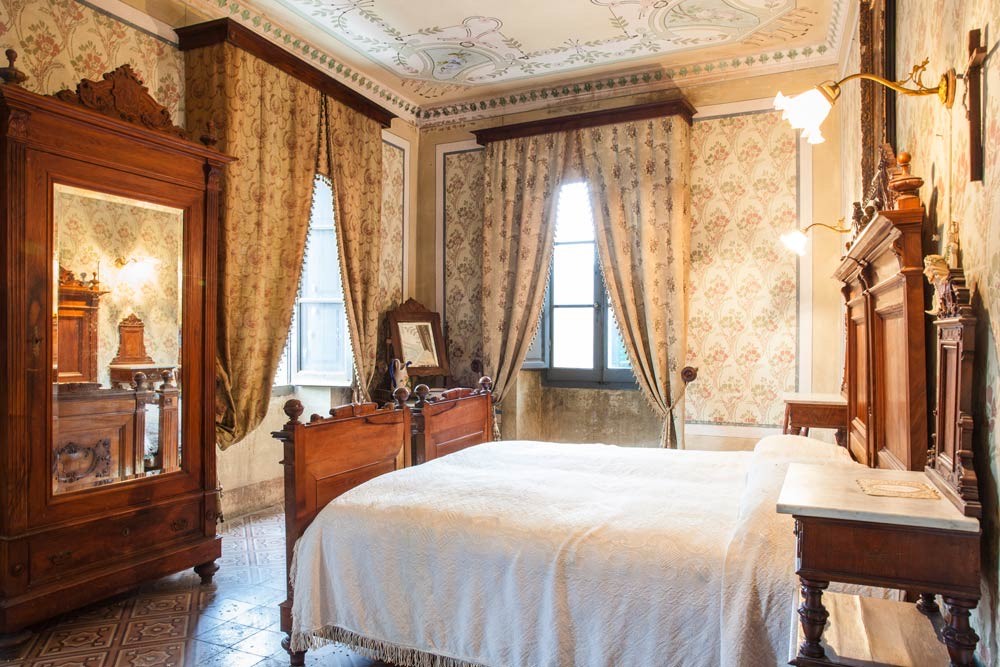
Built in 1908 at the behest of the Luras brothers Giovanni and Giovanni Maria Depperu, professional berrittaios (cap makers), the building, still 19th-century in its external features, surprises inside with the expressive richness of its decorations, which derives from a conscious adherence to the Art Nouveau language.
The pictorial decoration of noble palaces is not limited to the two main centers, Cagliari and Sassari, but is a widespread phenomenon throughout Sardinia, also involving smaller towns, in the presence of a bourgeois clientele particularly “attentive to cultural trends”.
The Depperu building applies the new code to the building type of Gallura housing. The residential architecture of the towns in upper Gallura is characterized by extreme simplicity, reproducing the construction and planimetric canons of the stazzu (traditional Gallura farmhouse), giving life to a scenario of single-family granite buildings on multiple levels covered with a roof. In this case, the facade model is evidently that of the 16th-century Roman palace.
Inside the building, painting is the protagonist in the decoration of ceilings and walls: the author, between 1910 and 1920 ca., is Fortunato Busonera, a little-known artist from Cagliari residing in Alghero.

Via Nazionale 46, Luras (SS)

Tamponi Perantoni Palace

The palace is located in the historic center of Luras and overlooks Via Mario Careddu and on the opposite front Via XX Settembre, through a porticoed courtyard. The house rises for four floors above an upper loggia punctuated by square-section columns.
The first owners of the palace were Giovanni Tamponi (01/12/1861 – 04/23/1935) and his wife Michelina Tamponi (1865 – 1938). Giovanni owned numerous hectares of land and was a fabric merchant in Silanus. They had seventeen children.

Dating back to the last years of the 19th century, it has been influenced by the Art Nouveau style, evident in the stylistic features of the main facade: plastered granite masonry, with elegant pictorial decorations inside, granite corbels supporting finely molded balconies; exquisite classical-style workmanship make this palace, built and inhabited throughout the 20th century, one of the most admired buildings in Luras.
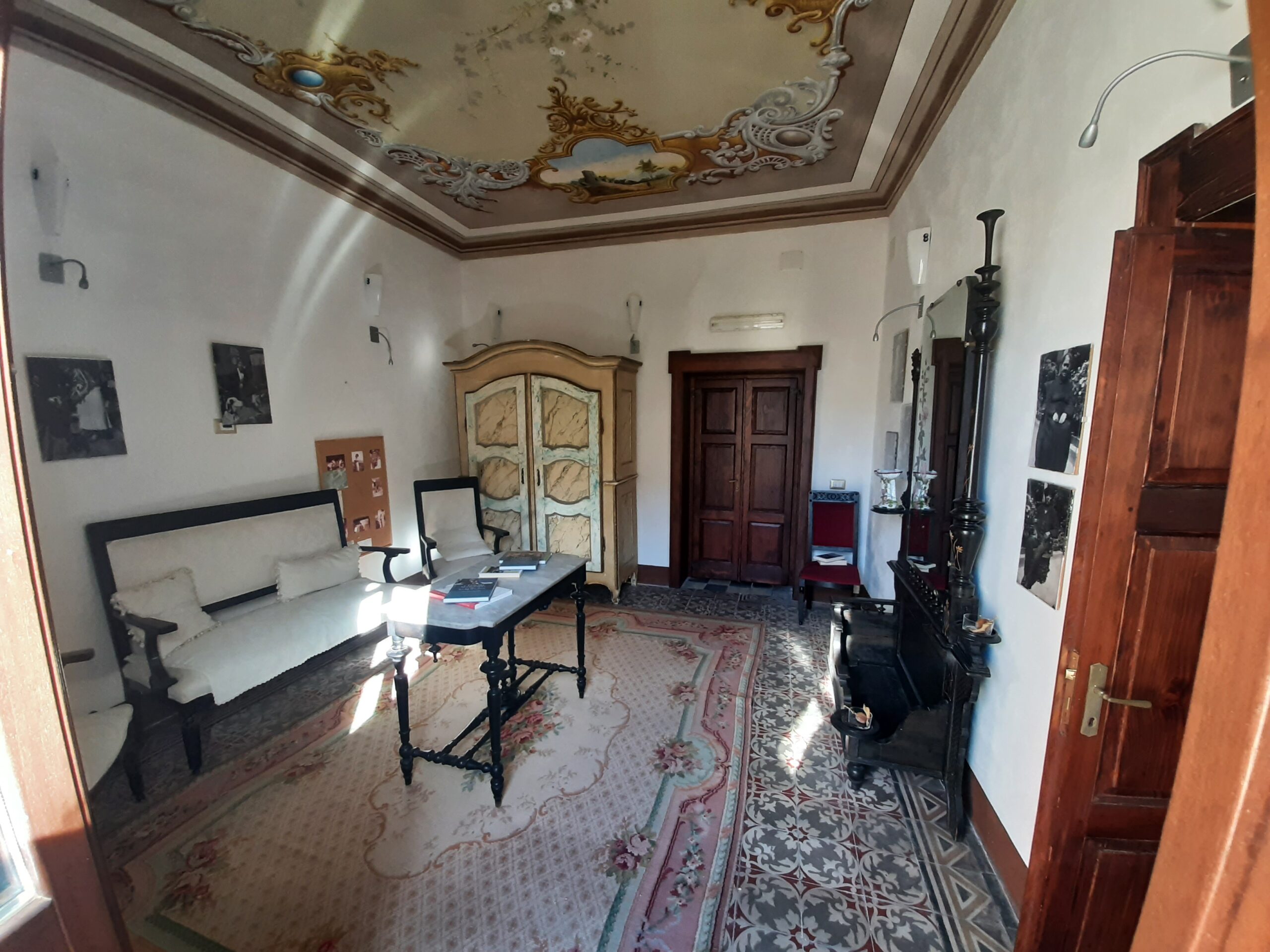
Inside, we can observe painted ceilings, finely designed floors from different periods, and a covered terrace on the top floor, which offers a splendid view of the town of Luras, the surrounding mountains and villages.

The Palace, owned by the Municipality of Luras, has been under protection by the Ministry of Culture since 1994 and has undergone some restoration work for the use and conservation of the property.
Today its rooms host some permanent exhibitions, including those of wine, 19th-century clothes, and the Luras poet Filippo Addis

Via Mario Careddu 4, Luras (SS)

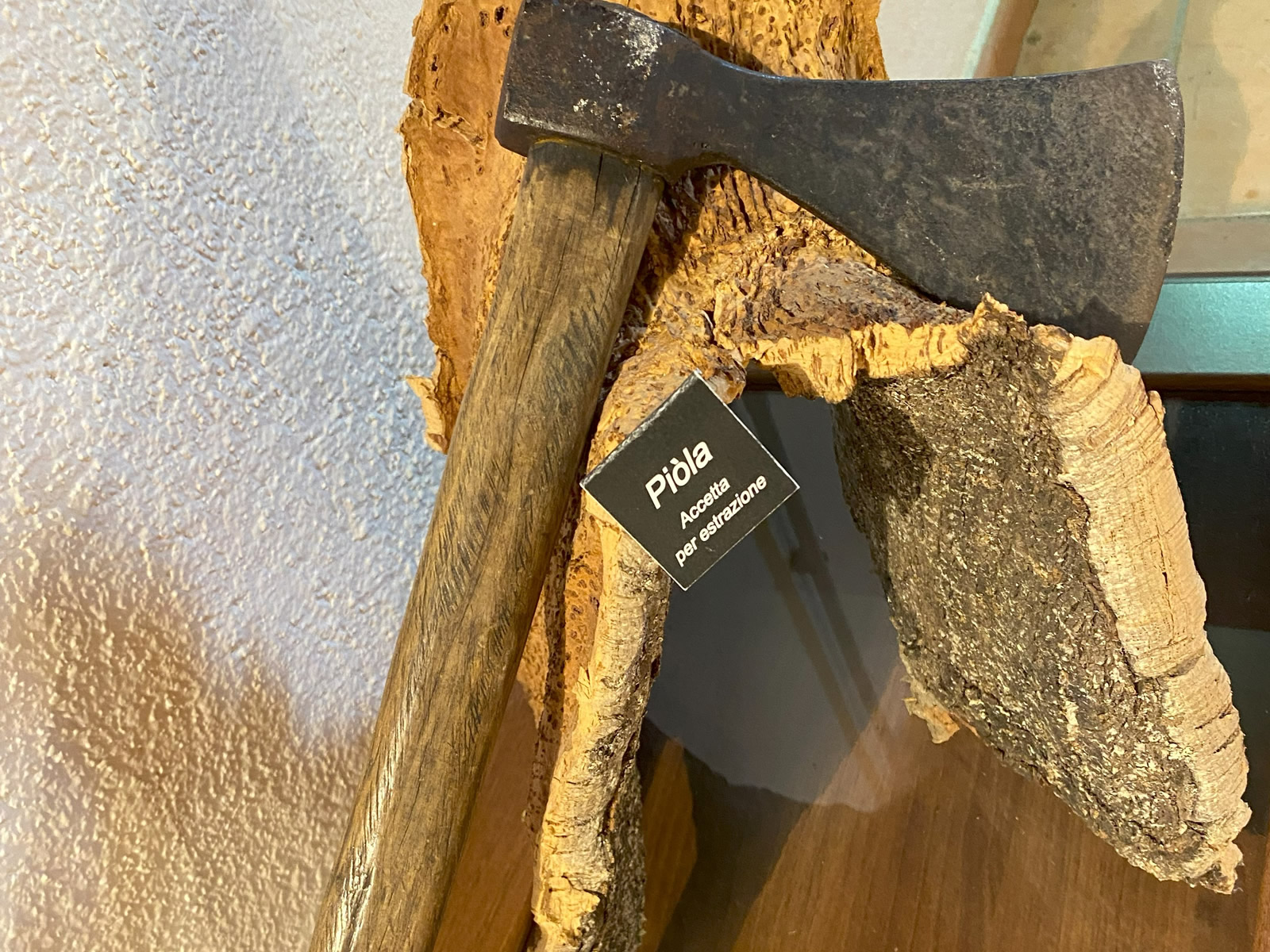
The hatchet is the only tool used by workers specialized in cork extraction, who are called extractors or, more commonly, bark strippers, in Gallurese Li Bucadori. A figure rich in history and tradition, never replaced by advancing technology.
Each extractor has their preferred and personal hatchet, almost always handcrafted and jealously guarded. Each of them usually works in pairs, which must be perfectly synchronized and in tune.
From this point on, they move into action. Positioning themselves on opposite sides of the oak tree, the ‘Bucadori’ make several extremely precise cuts at strategic points on the trunk. In particular, they first make a horizontal cut along the entire circumference at a precise height between 1.5 and 2–3 meters, called the ‘corona’ or ‘collana’ (crown or necklace).
A meticulous cut, done well only if it has a certain inclination with respect to the vertical of the tree, if it follows a straight line, and if its surface is clean and smooth.
But above all, a cut that highlights and enhances the experience and skill of each bark stripper compared to their colleagues.
Following the entire vertical of the plant and tracing the different portions of bark to be extracted, called planks, the other cuts are named openings or rulers.
Not by chance, the bark strippers must try to act by imparting a certain force to the hatchet, with precise sensitivity, in order to avoid damaging the layer underneath the cork, the so-called phellogen, fundamental for the life of the cork oak. (1591) Source: Sadenda
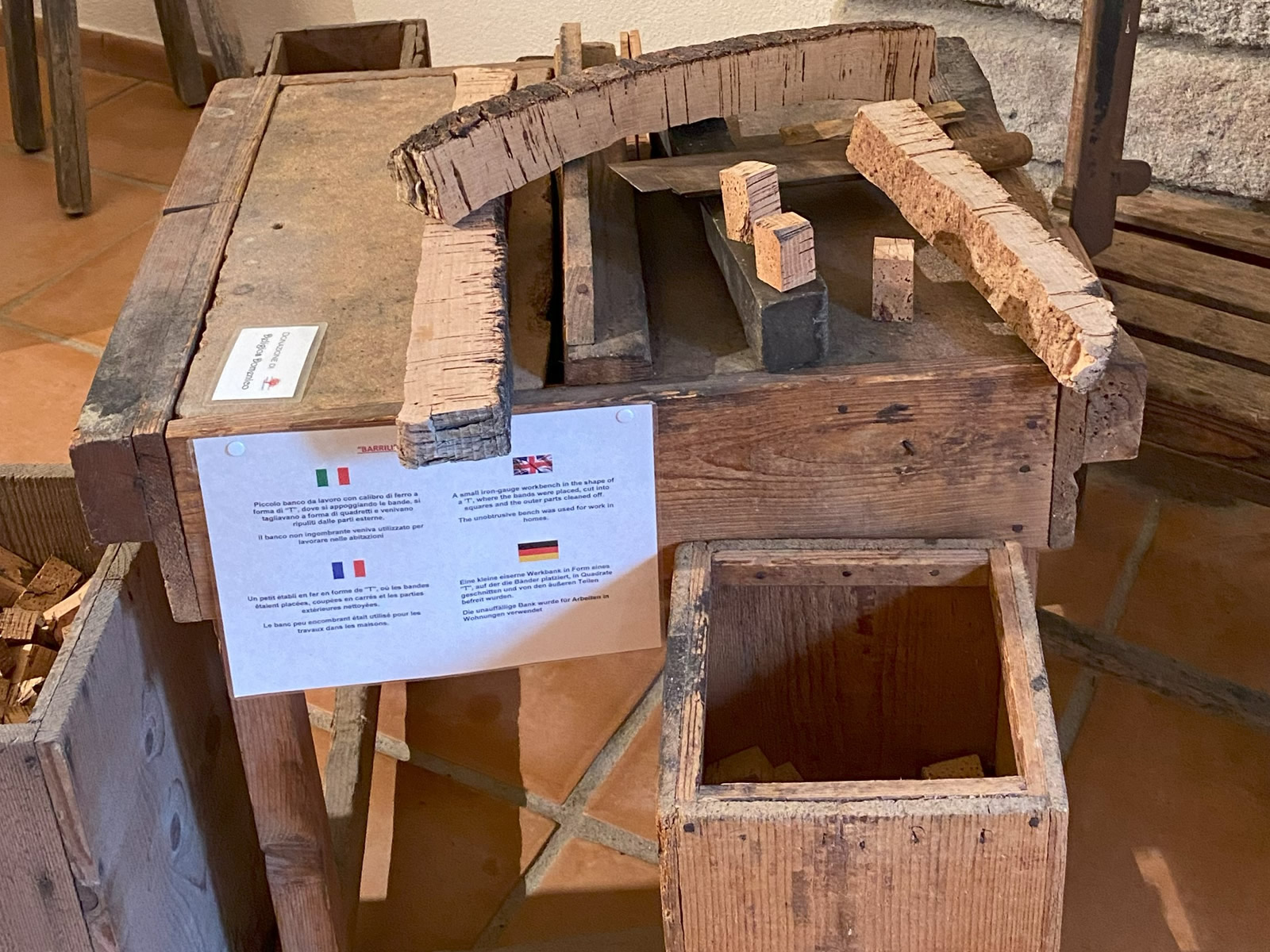
Ancient workbench of the ‘square maker’ on which cork strips were placed and cut to produce squares. The squares were made by eye without measurements and were more or less always the same.
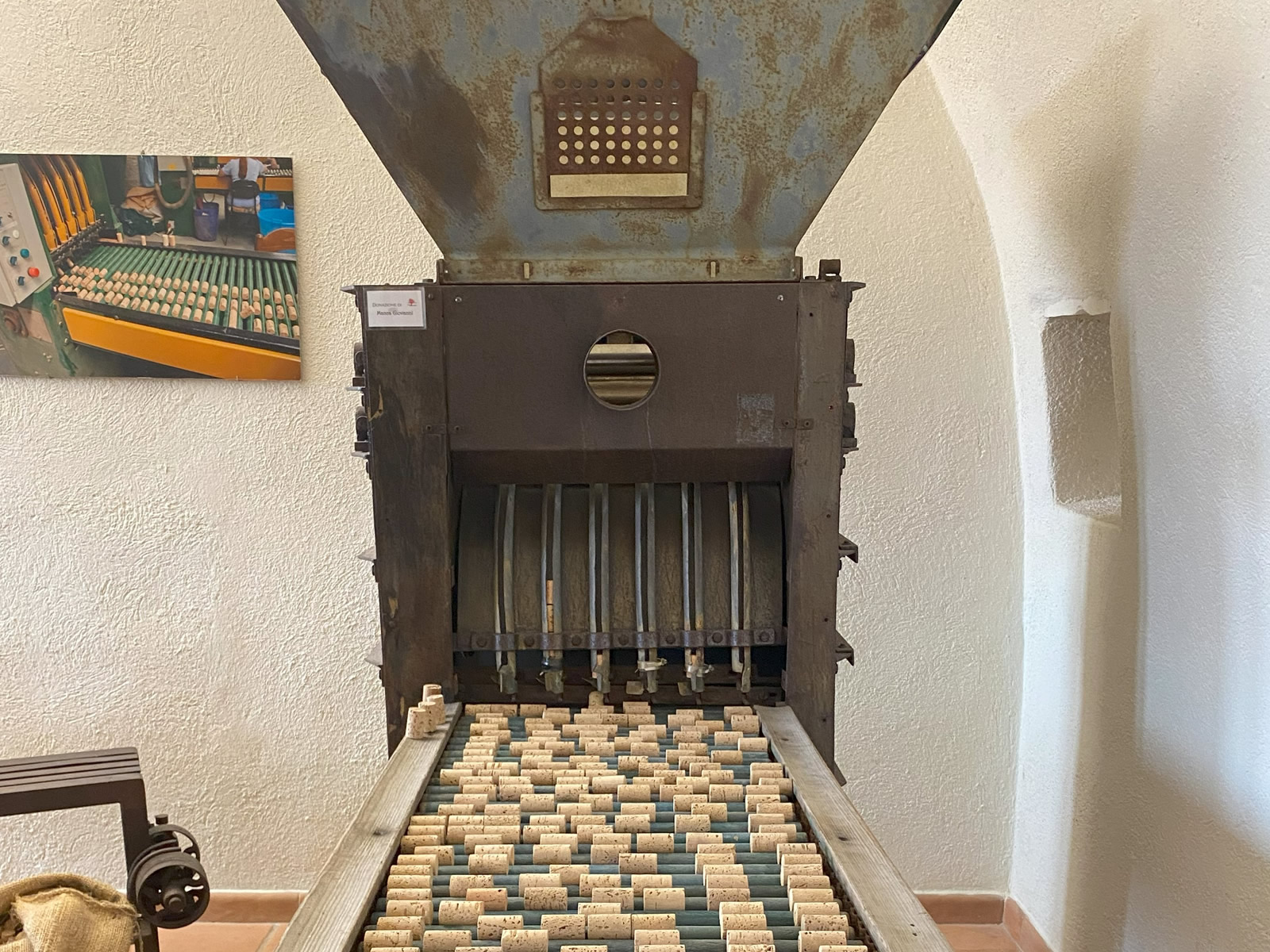
Machinery used for the selection of corks which, while rotating and sliding between the rollers, are chosen by the operator according to the quality desired.
This is the last phase of cork processing.
Museum of Banditry

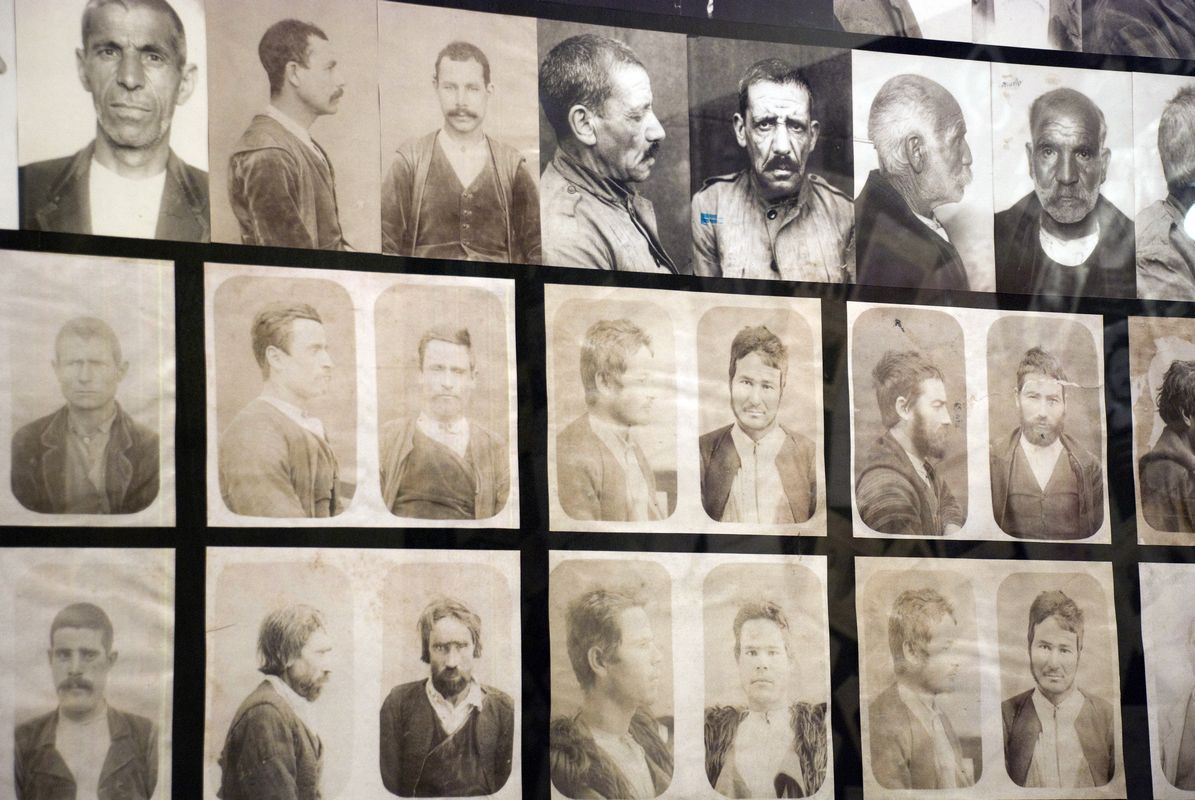
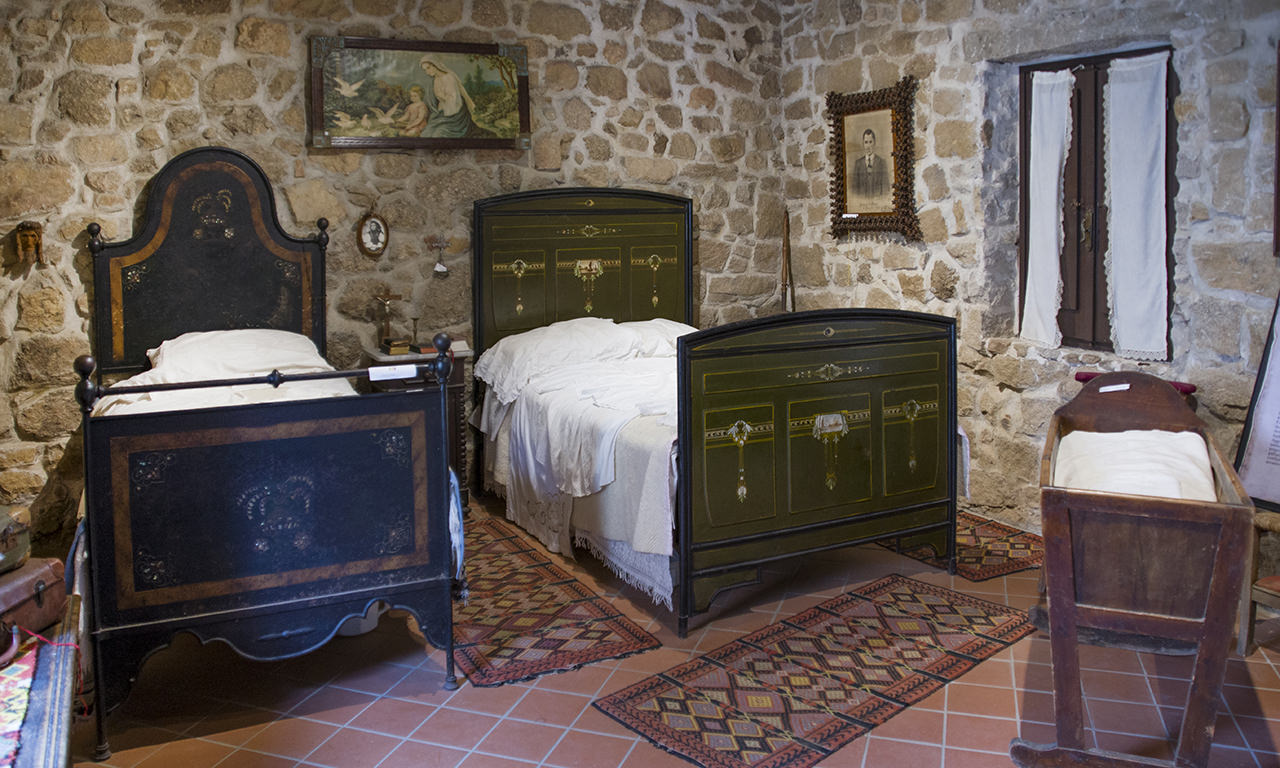
The Museum of Banditry aims to conduct research on the material testimonies of man and his environment: it acquires them, preserves them, communicates them, and above all exhibits them for the purposes of study, education, and enjoyment. Without running the risk of mythologizing the figure of the outlaw and exalting his deeds, the museum’s objective is rather to spread positive values for the construction of a mentality that favors the affirmation of legality and public morality at every level. In a territory like Gallura, which was the protagonist of the banditry phenomenon for about three centuries, this cultural center fits perfectly, offering visitors and residents an overview of documents, photos, films, objects, and testimonies of the past, but above all trying to stimulate reflections on a future to be built together.

MUSEUMS OF THE
TERRITORY

Citadel of art
and music

ARCHAEOLOGICAL NATURE AREAS

Nature area

APP Gallura città di paesi

Installa
×
PWA Add to Home Icon

INSTALLA L'APP{/bold}} Gallura città di paesi sul tuo telefono PWA Add to Home Banner e poi aggiungila alla schermata Home

×