


Home » Country Churches
Country Churches
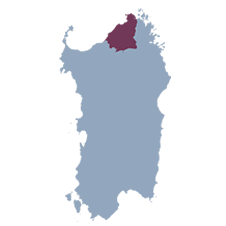
The country churches of Gallura are fascinating places rich in history: these are small churches scattered throughout the region, often always open and ready to welcome pilgrims and/or travelers exploring the territory. The country churches testify to the deep religious devotion of the local community and are of great ethnographic interest. Many of them date back to ancient times, when they were parishes of small settlements that have now disappeared, and their architecture reflects local traditions, with styles reminiscent of rural shepherds’ dwellings. This itinerary through the churches of the Municipality of Trinità d’Agultu and Vignola offers a fascinating combination of history, culture, and landscape. The festivals held around these churches represent an important occasion for community unity and celebration. Some of the country churches in the Municipality of Trinità d’Agultu and Vignola have also been the setting for events narrated in fictional form by Enrico Costa in the famous novel “The Mute of Gallura”. This work, set in 19th century Gallura, recounts facts related to the feud between local families, intertwining historical and legendary elements, and providing a fascinating picture of the human events that took place around these churches. Following the itinerary offers not only the opportunity to immerse oneself in a dimension of faith and popular tradition, breathing an atmosphere steeped in history and memory, but also to explore the natural beauty of the rural Gallurese landscape: verdant hills, centuries-old olive groves, dry stone walls, and silences interrupted only by the sounds of nature, an experience that uniquely and evocatively combines culture and nature. All churches are accessible by car, but it’s important to note the presence of narrow roads and, in some sections, uneven terrain. The overall distance and elevation changes make the itinerary challenging: therefore, tackling the route on foot or by bike requires good physical preparation, determination, and adequate training. It is recommended to wear long pants and comfortable shoes and to always carry a supply of food and water.
Church of San Giuseppe
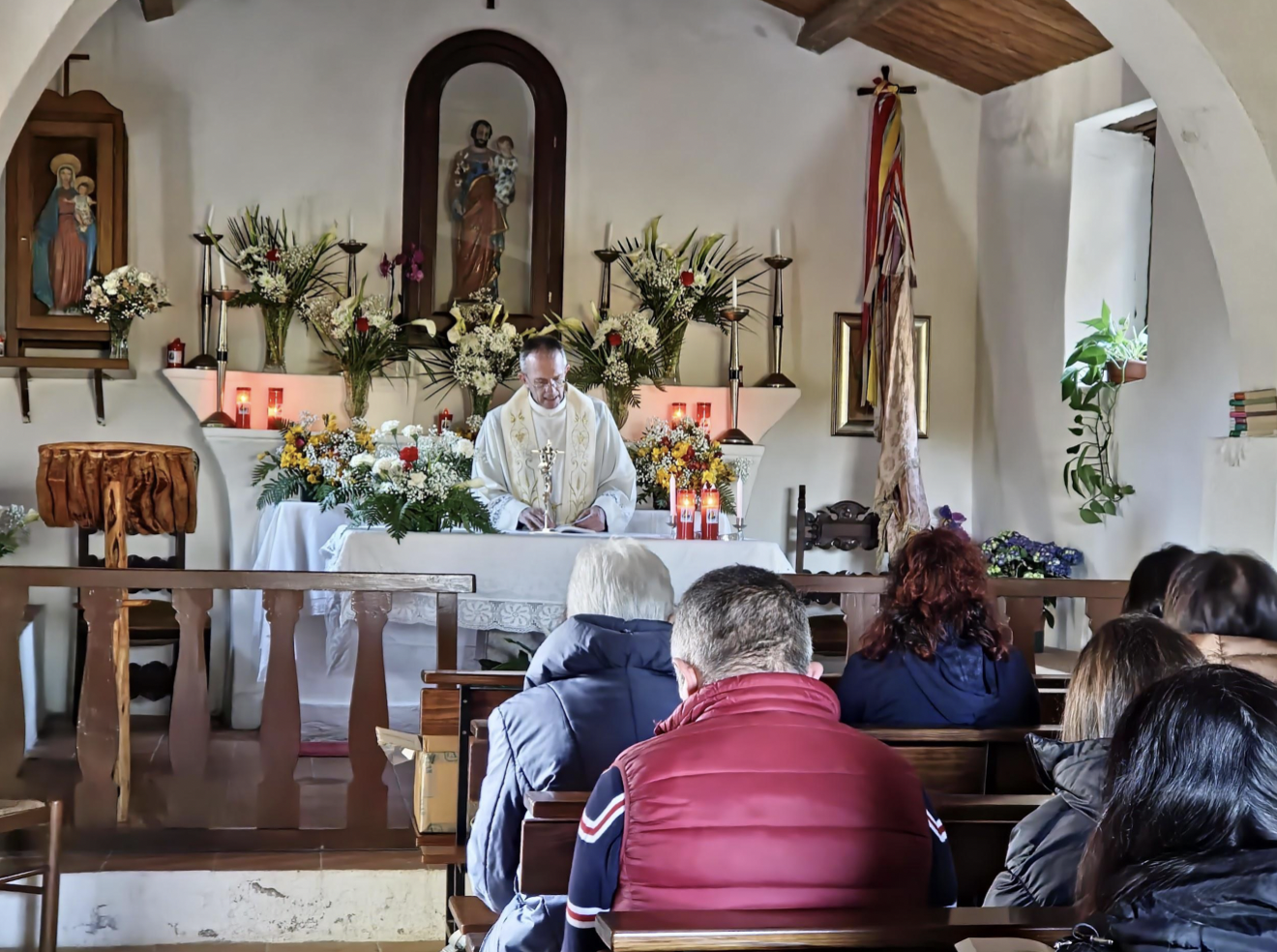
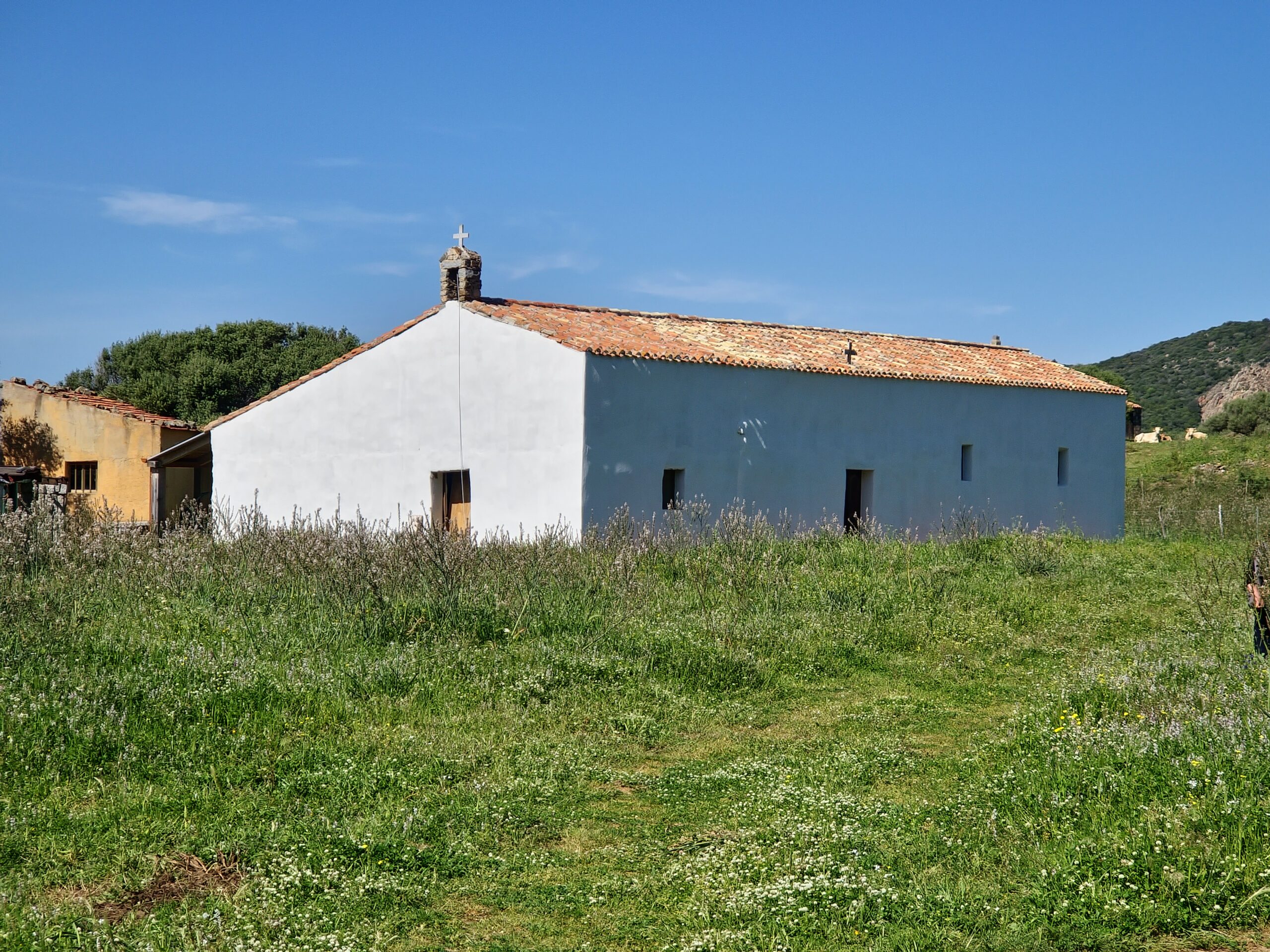
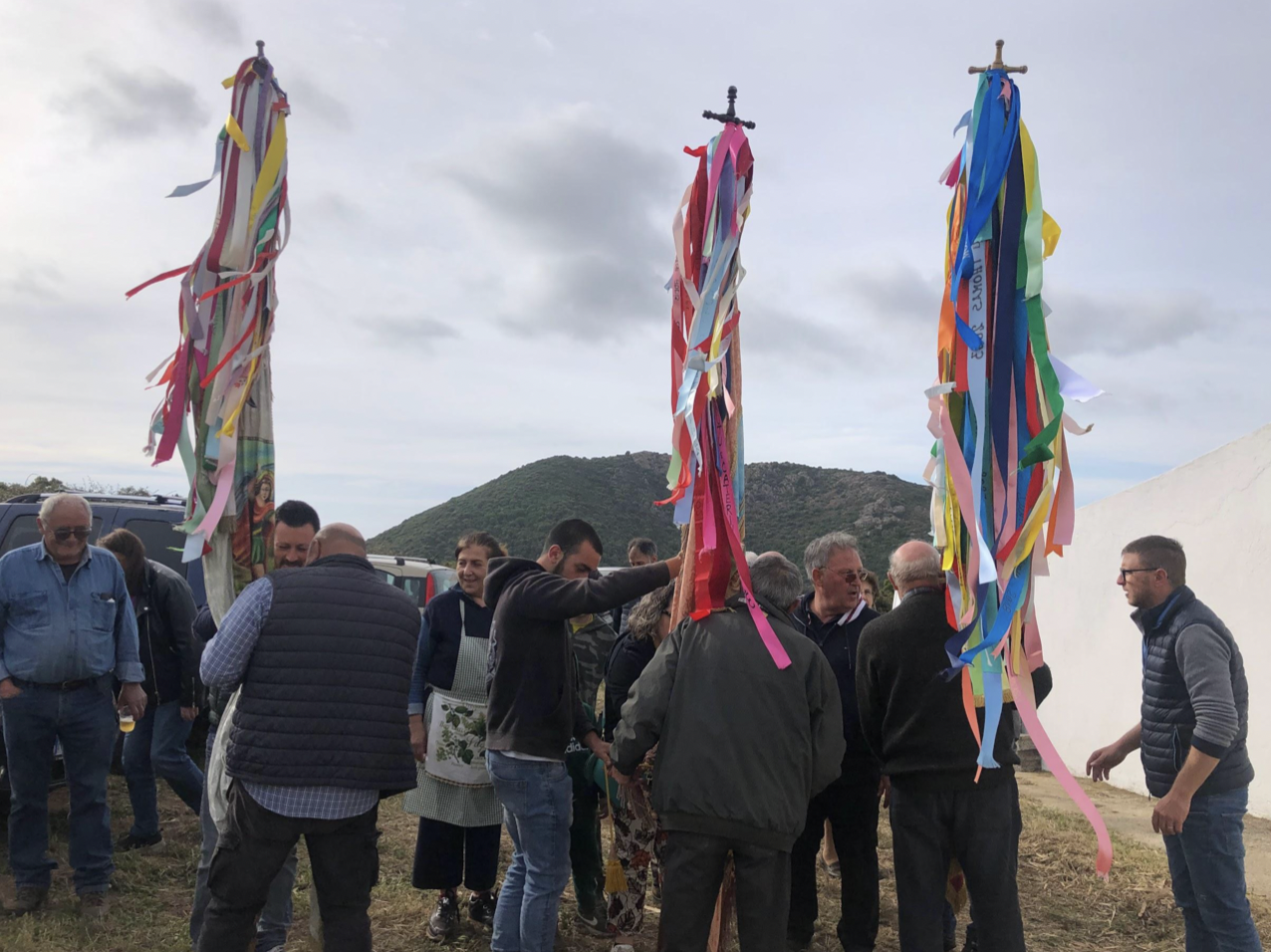
Nestled among holm oaks and pines, almost at the top of Mount Cugurenza, stands the small church dedicated to San Giuseppe, the husband of the Blessed Virgin Mary (in Gallurese, Santu Gjaseppa di Cugurenza). The church of San Giuseppe is located at an altitude of 640 meters, in the Cugurenza area, about 5 km from the town center of Trinità d’Agultu and is “known as San Giuseppe the Worker”. Built in the second half of the 18th century, it is said to have been constructed as an ex-voto by Francesco Lepori, known as Barracca, and some local shepherds. The church has a rectangular plan with a double entrance and a simple facade devoid of ornaments, reminiscent of the ancient rural houses in the area. On the roof, corresponding to the so-called janna di punta (a dialect term indicating the main entrance), a metal cross has recently been installed. Inside, it has a single nave divided into three bays by arches supported by lateral buttresses and is plastered and painted white both externally and internally. Nearby, surrounded by holm oak and pine trees, is the Suprastantìa building, which takes care of the church’s maintenance and organizes the festival. Until the last century, Mount Cugurenza was covered with dense forests of holm oaks and cork oaks, a refuge for bandits and a sad theater of vendettas and criminal actions: on March 19, 1850, near the church of San Giuseppe, an ambush was set for the shepherd Pietro Vasa: this was the episode that gave rise to the bloody feud between the Aggesi families of Vasa and Mamia. The feast in honor of the saint is held every year on March 19 and is the first country festival celebrated from the beginning of the civil year. Starting early in the morning, participants begin cooking roast meat and traditional dishes, including suckling pigs, lambs, cordula, and tattalliu. At 12:00, the liturgical celebration begins with Holy Mass inside the small church, and after the Eucharist, li putittòri offer homemade sweets. At 16:30, the celebration concludes with the traditional three circles around the country church, and the flag is returned to the Church of the Holy Trinity to be kept until the following year. The civil celebration, however, continues until late evening, in an atmosphere of great friendship and conviviality.
Church of Sant'Antonio
The church dedicated to Saint Anthony of Padua is located a few kilometers from the village, in the locality of Li Colti, the birthplace of Sebastiano Addis Tansu Razzu, nicknamed the “Mute of Gallura“. The date of the church’s construction is uncertain. According to local tradition, it was built at the beginning of the 19th century as an ex-voto by the pastoral families Suelzu and Bianco, who resided in the area. However, a note written on October 14, 1745, attests to its existence even earlier. The wall structure, which showed signs of numerous renovations and expansions over the centuries, has recently undergone a restoration intervention. In the small rural church, every year on June 13, the liturgical memory of Saint Anthony of Padua, the sanctuary’s titular saint, is honored. The Solemn Mass is celebrated at 12:00 in the small crowded church, and after the mass, the community gathers for a rich and convivial lunch, a symbol of union and cultural continuity. Preparations begin in the early hours of the morning with collective and organized work among the four societies devoted to the saint. Among the country festivals, it is certainly one of the most heartfelt and attended, not only by locals but also by numerous tourists. The meal begins with the distribution of bread, water, and wine, followed by Gallurese soup, a symbolic dish that celebrates the community’s peasant roots. The soup is followed by boiled meat with vegetables, local cheese, and to conclude, homemade desserts and traditional liqueurs.
Church of San Michele
The Church of Santu Migali stands on a panoramic hill, facing Mount Cùccaru, famous for having been a shelter for many outlaws in the past. We know that the church of San Michele already existed in 1745, and tradition tells that an outlaw stole the statue of San Michele from a medieval church near Viddalba, intending to build a church in his own territory, so as to take advantage of the “right of asylum” which, according to the laws of the time, guaranteed impunity to anyone who took refuge in the sacred place. The architecture is similar to the rural constructions of Gallura, characterized by a gabled roof and a rectangular plan. The sacredness of the building is indicated only by the presence of the metal cross on the ridge of the roof. Inside, there is a single nave, divided into three bays by round arches. The last bay constitutes the presbytery, where in the center you can admire the new simulacrum of San Michele, dating back to the 1960s. The feast of Santu Migali takes place every year on May 8 in the wide valley, facing Mount Cùccaru. At 12:00, the mass is celebrated in honor of Saint Michael the Archangel, and at the end, the lunch begins: bread is served first, followed by Gallurese soup with lu ghisatu, boiled meat, salad, seasonal vegetables, cheeses, desserts, coffee, and after-dinner drinks. The celebration concludes at 18:30 with the traditional three circles around the church, accompanied by the sound of the small bell.
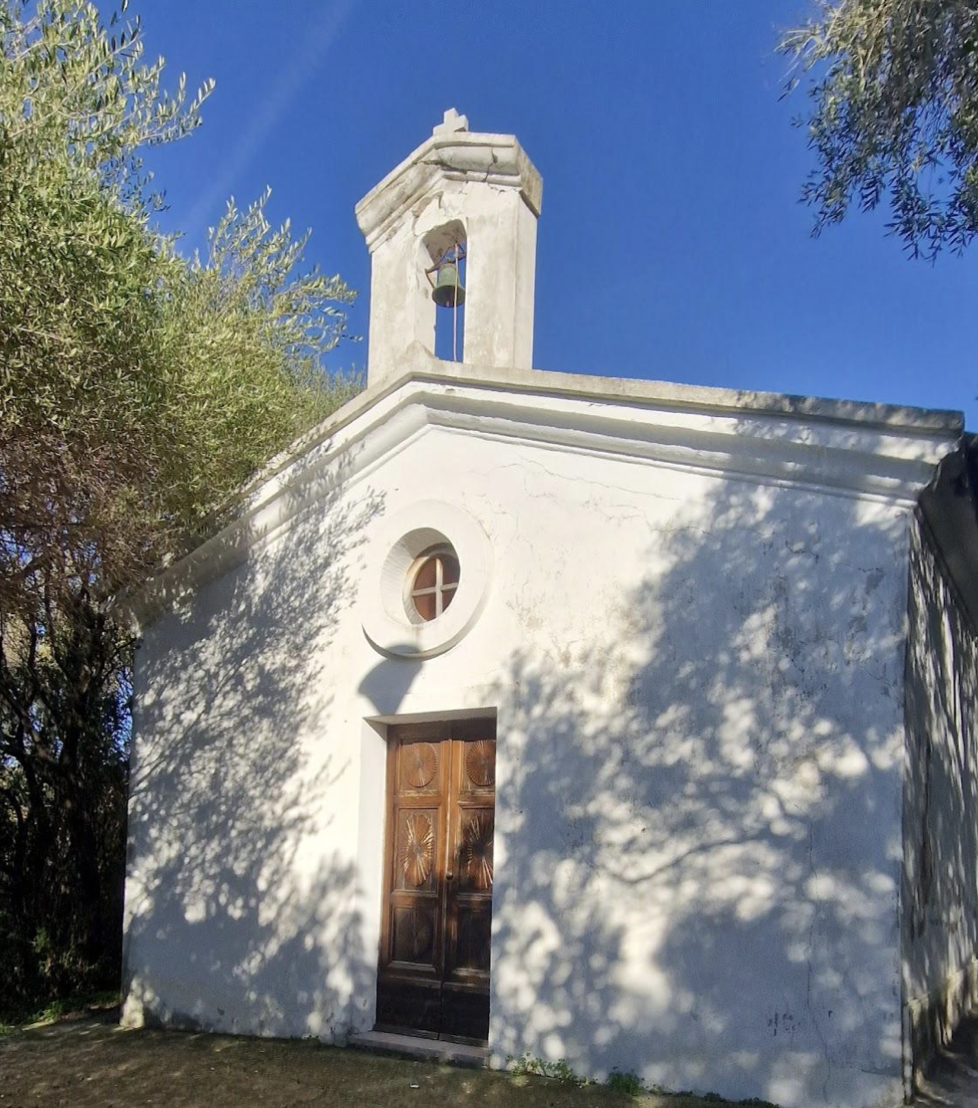
Church of Santa Maria di Vignola
The Church of Santa Maria di Vignola stands near the Rio Vignola, 22 km from the village, almost on the border with the municipality of Aglientu. The church is located near La Ghjunchizza, the site where the 1849 ceremony of ‘l’abbrazzu’ between the betrothed Pietro Vasa and Mariangela Mamia took place, as described by Enrico Costa in his work “The Mute of Gallura”. Perhaps the oldest among the churches in the Trinità area, it is the only one documented since the Middle Ages. Over the centuries, the church has undergone various renovations that have left no trace of the original structures. Currently, it features the typical characteristics of other Gallura churches: a rectangular layout with a double entrance, a gabled roof, and a small bell gable on the facade. Inside, there is a single nave, divided into three bays by two rough granite arches. The festival of Santa Maria di Vignola, which attracts hundreds of people, requires complex organization. From early morning, cooks light the stoves to boil meat for the broth and the inevitable ‘ghisatu’, then proceed to prepare the ‘zuppa gallurese’. Lunch begins with bread and ‘zuppa gallurese’, followed by boiled meat and vegetables. At the end of the meal, typical sweets, often homemade, are served. The day continues in the shade of centuries-old wild olive trees, offering an opportunity for socializing and celebrating community devotion.
Church of San Giovanni Battista di Lu Colbu
The Church of San Giovanni Battista (Santu Gjuanni) is located in the hamlet of Lu Colbu. The construction of the church of San Giovanni Battista began in 1929 thanks to the work of private individuals, who donated the land for the chapel and the square area, and to funds allocated by Pius XI, to facilitate the use of liturgical services for the inhabitants of the stazzi through the construction of some churches. The church of Santu Gjuanni has a simple structure and a neo-Gothic style, identical in design to the other country churches built by Pius XI. The facade, with a double pitch, has a small spired bell tower positioned corresponding to the wooden door of the main entrance. In 2024, the church underwent a restoration intervention, giving the building a renewed and well-maintained appearance. The feast of San Giovanni is celebrated on June 23 and 24, and is organized by a committee of about 30 people and follows the traditional program of country festivals. On the eve, after the usual “caragolu di li bandéri” around the church, a dinner of mixed meat stew is offered. The following day, after the Solemn Mass, a community lunch is held, which includes Gallurese soup with lu ghisatu and boiled meat, served in the shade of majestic holm oaks, wild olive trees, and strawberry trees.
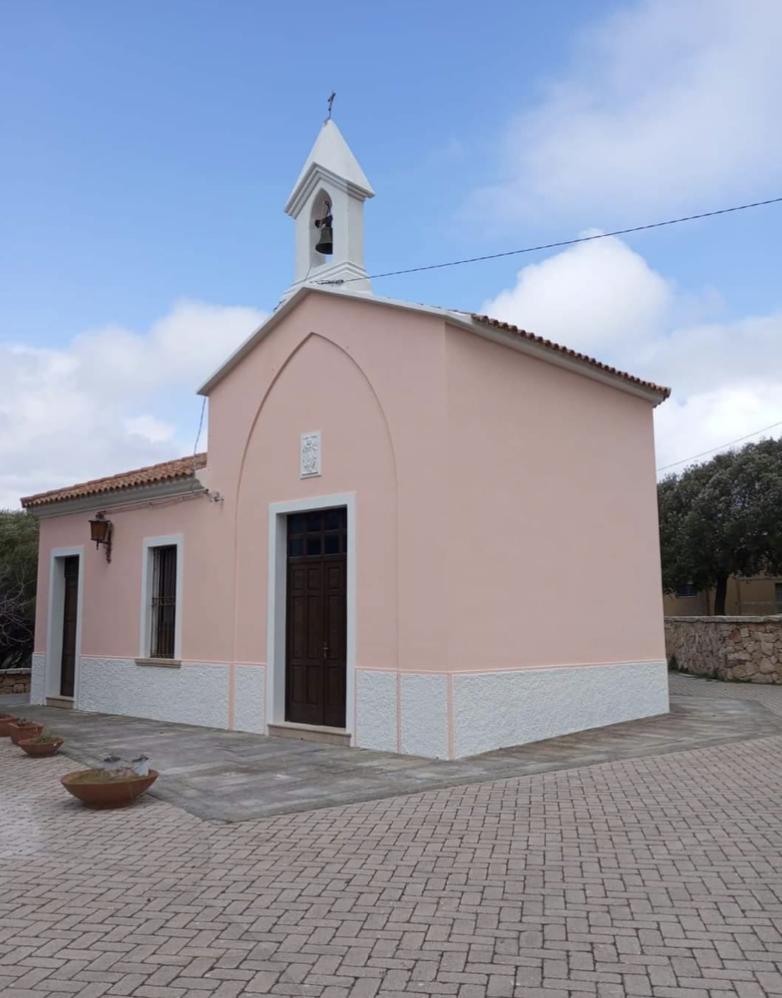
Church of San Pietro Martire da Verona
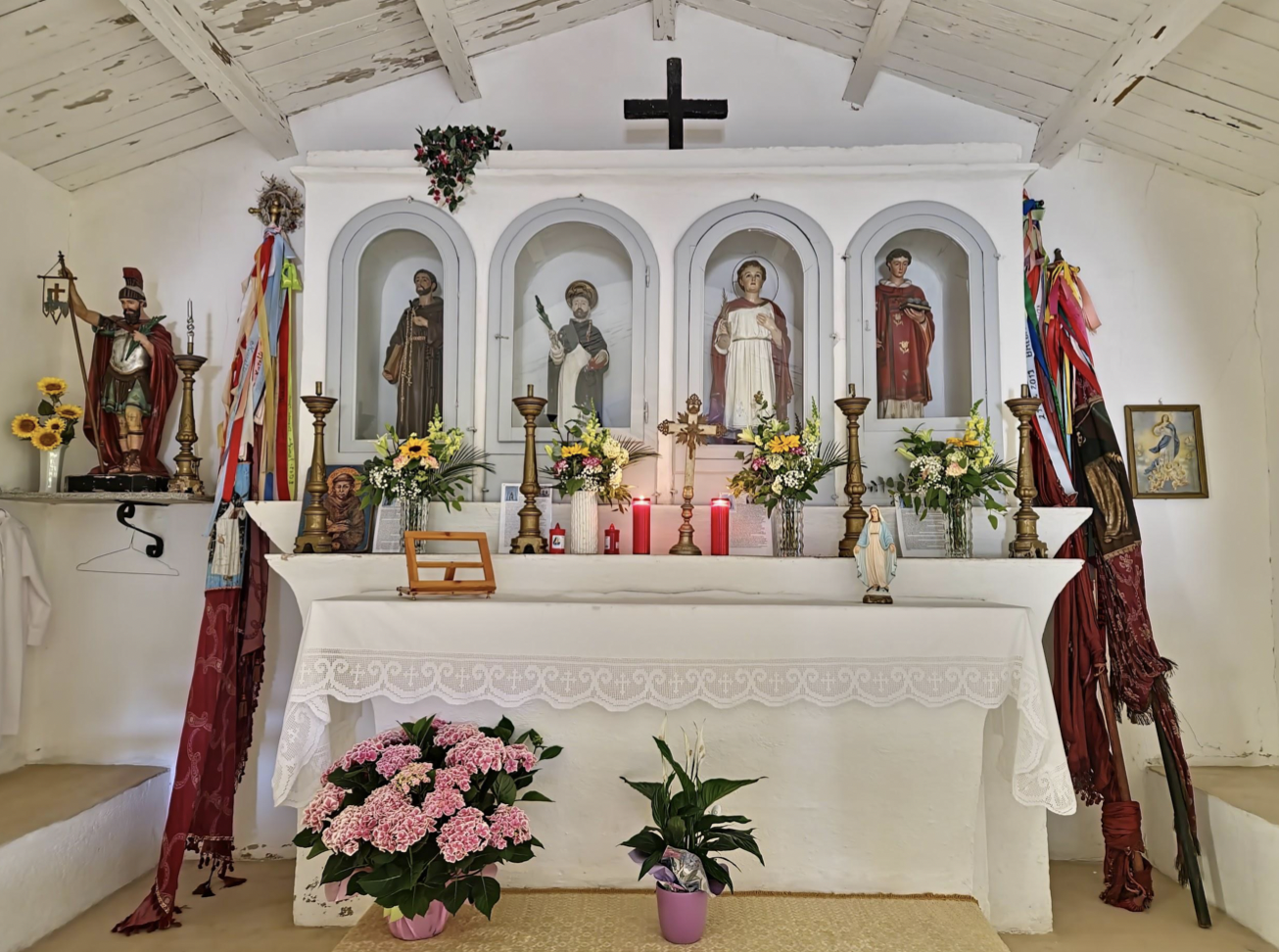
The country church dedicated to San Pietro martire da Verona, locally called Santu Petru, stands on a panoramic hill, in the locality of Lu Capruleddu. It was built between the 18th and 19th centuries and features the typical architecture of other country churches: it has a rectangular plan, simple gabled facade, and a small bell gable. Inside the church, there is a single nave divided into three bays by two round arches, which support the roof. The presbytery is separated from the hall by wooden balustrades painted to imitate marble; on the back wall is the altar composed of three steps and four niches housing the simulacra of St. Peter of Verona, St. Francis of Assisi, St. Pancras, and St. Stephen the first martyr. It is said that the simulacrum of San Pietro was stolen from a dilapidated church, located in the ancient medieval village of Vinyolas, by some faithful from Trinità d’Agultu and surroundings who were often unable to reach the Vignola church due to the floods of the Rio Vignola, which made the path impassable. The feast of San Pietro is organized by two distinct Suprastantìe locally called “bandéra eccia”, the main and oldest one (which has the task of cleaning and setting up the church for the feast day) and the “bandéra noa”. The preparation of the lunch begins early in the morning with the cooking of the meat broth necessary for the realization of the main dish: the Gallurese soup, in dialect la suppa. At 12:00, the Solemn Mass in honor of San Pietro Martire da Verona begins, and after the function, while in the kitchens they start preparing the Gallurese soup, delicious local sweets are offered outside the church. The lunch includes, in addition to the Gallurese soup with lu ghisatu, boiled meat with salad and seasonal vegetables, cheeses, local wines and liqueurs, and typical homemade desserts. The celebration concludes in the evening, around 17:30, when the flag bearers repeat the three circles around the country church, while a volunteer rings the small bell, and after finishing the circles, they bring the three flags back to the Old Church where they will be kept until the following year. The entire day is characterized by a spirit of collaboration among the organizers and a convivial atmosphere among the participants, demonstrating the community’s desire to carry on traditions. In the same church and with the same modalities, the solemnities of San Pancrazio on May 12 and San Francesco on October 4 are also celebrated.

 e poi
e poi