



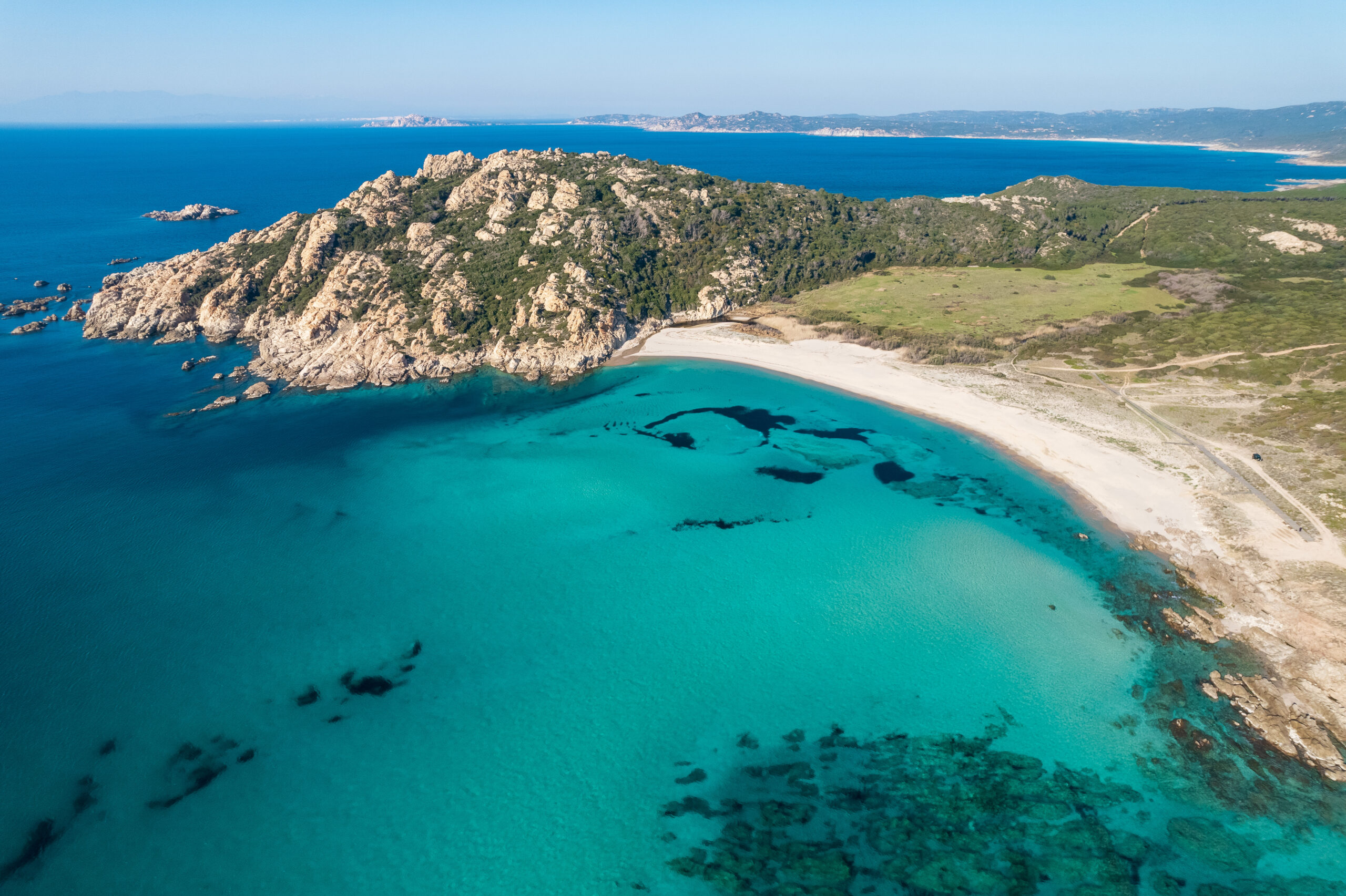
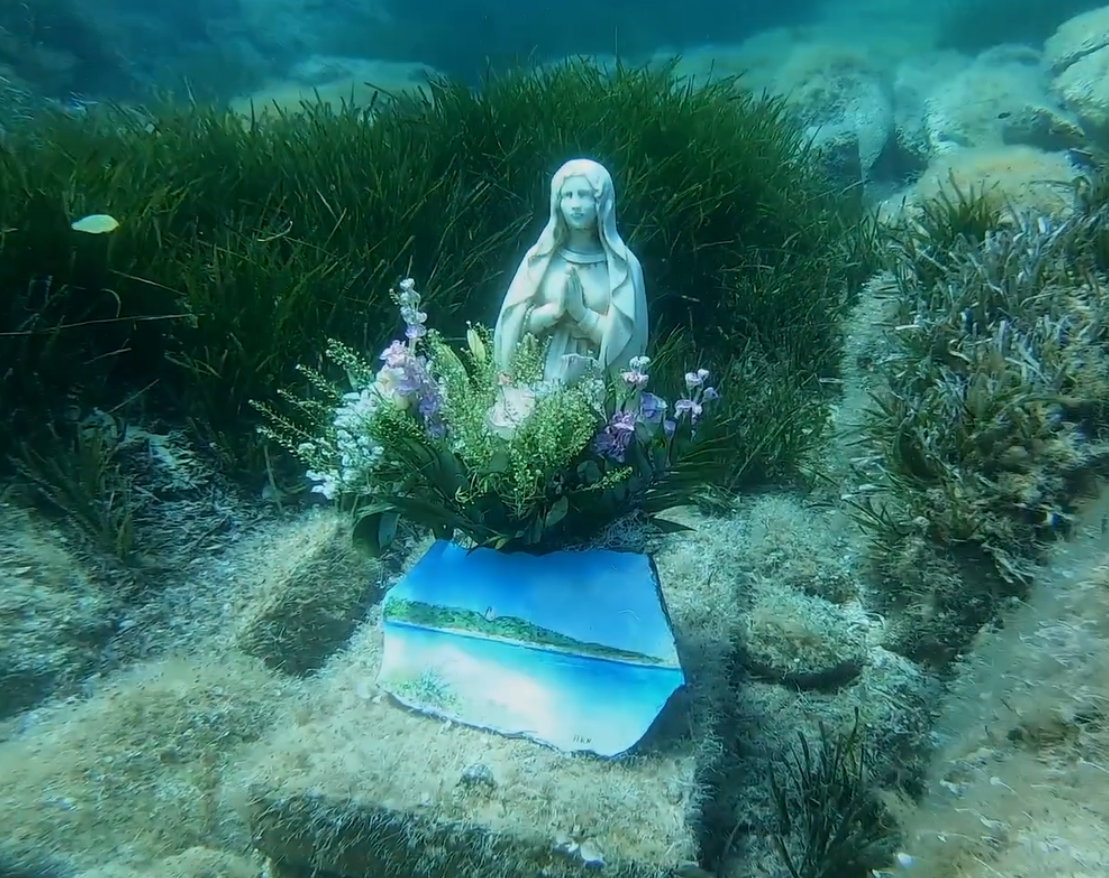
 In 2023, the Aglientu Pro Loco decided to donate a marble statue of the Madonna to the sea of Vignola near the Vignola Tower as a sign of recognition and gratitude for what the coast and sea of Aglientu have always offered.
On 05/26/2024, as the 1st anniversary and as a sign of further recognition towards the Madonna, devotion was renewed by bringing a bouquet of flowers previously blessed by the priest of Aglientu, Don Cipriano, and a painting on granite stone depicting the coast of Vignola with the splendid Tower dominating the sea.
The mass celebration took place at the church of San Silverio in Vignola mare.
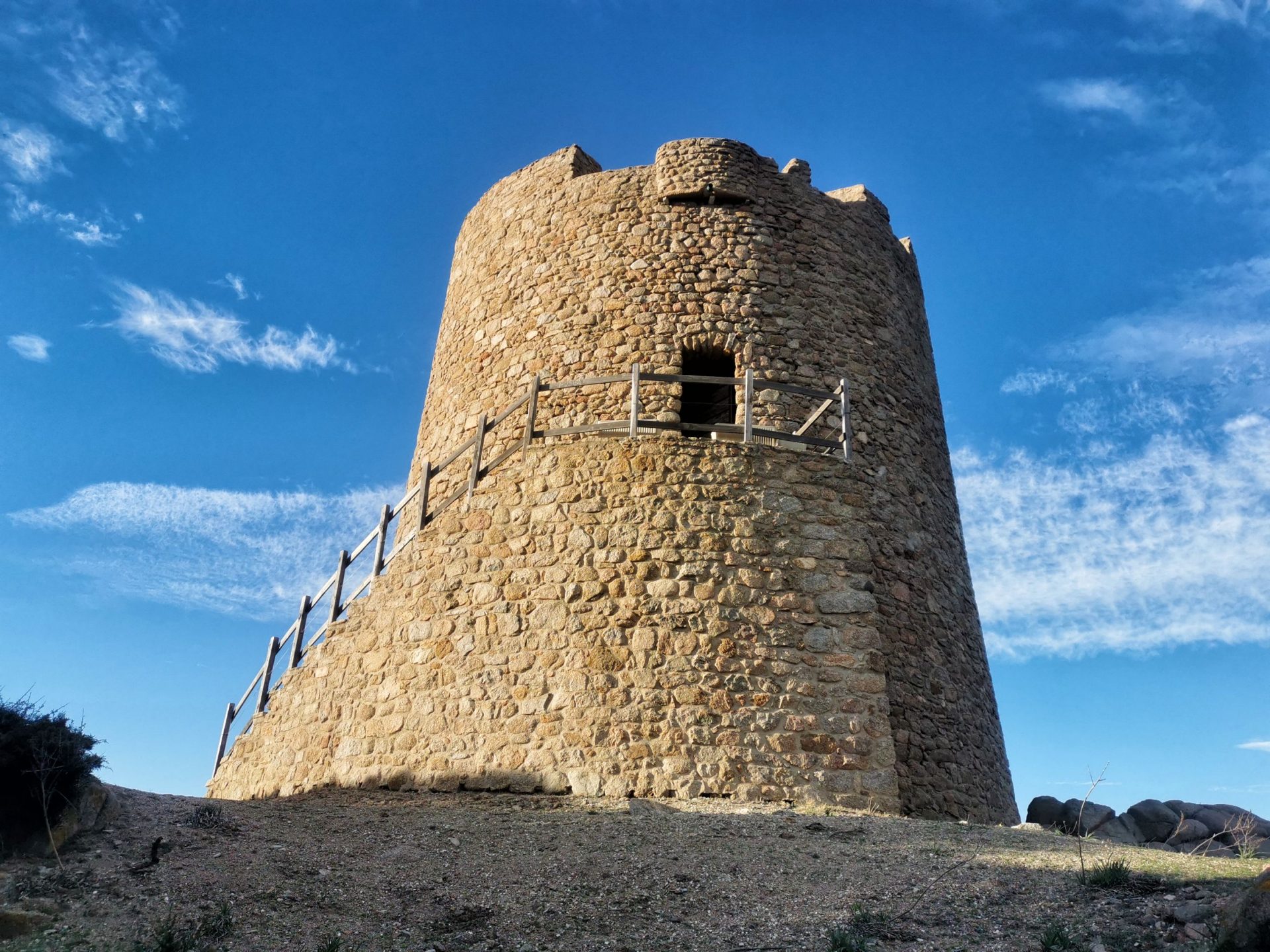 The Tower is located on a slight granite hill situated between the tourist villages of Vignola Mare and Portobello di Gallura.
It was built during the Spanish domination period around the 17th century, and according to some documents, the year of construction dates back to 1606.
Its construction was part of the coastal defense project implemented by King Philip II of Spain, a system of towers created to defend the territory from sea incursions.
The towers were indeed placed within sight of each other so that they could communicate and signal potential dangers, with fire or smoke emitted from the top of the towers where wrought iron pans were positioned to generate combustion.
Life inside the towers was very hostile. They were small, poorly ventilated environments with worn-out equipment, grueling guard shifts, and most of the towers were located in wild places, in the absence of nearby villages.
It is a torre de armas (armed tower), manned by a garrison composed of a commander, an artilleryman, and three soldiers, which in 1801 was reduced to just the commander with two tower guards. Given its position at an elevation of 25 meters, it allowed a wide view of the sea and the mainland.
The presence of the Tower was fundamental for monitoring the Vignola tuna trap and remained subsequently manned, even after the suppression of the Tower Administration in 1842.
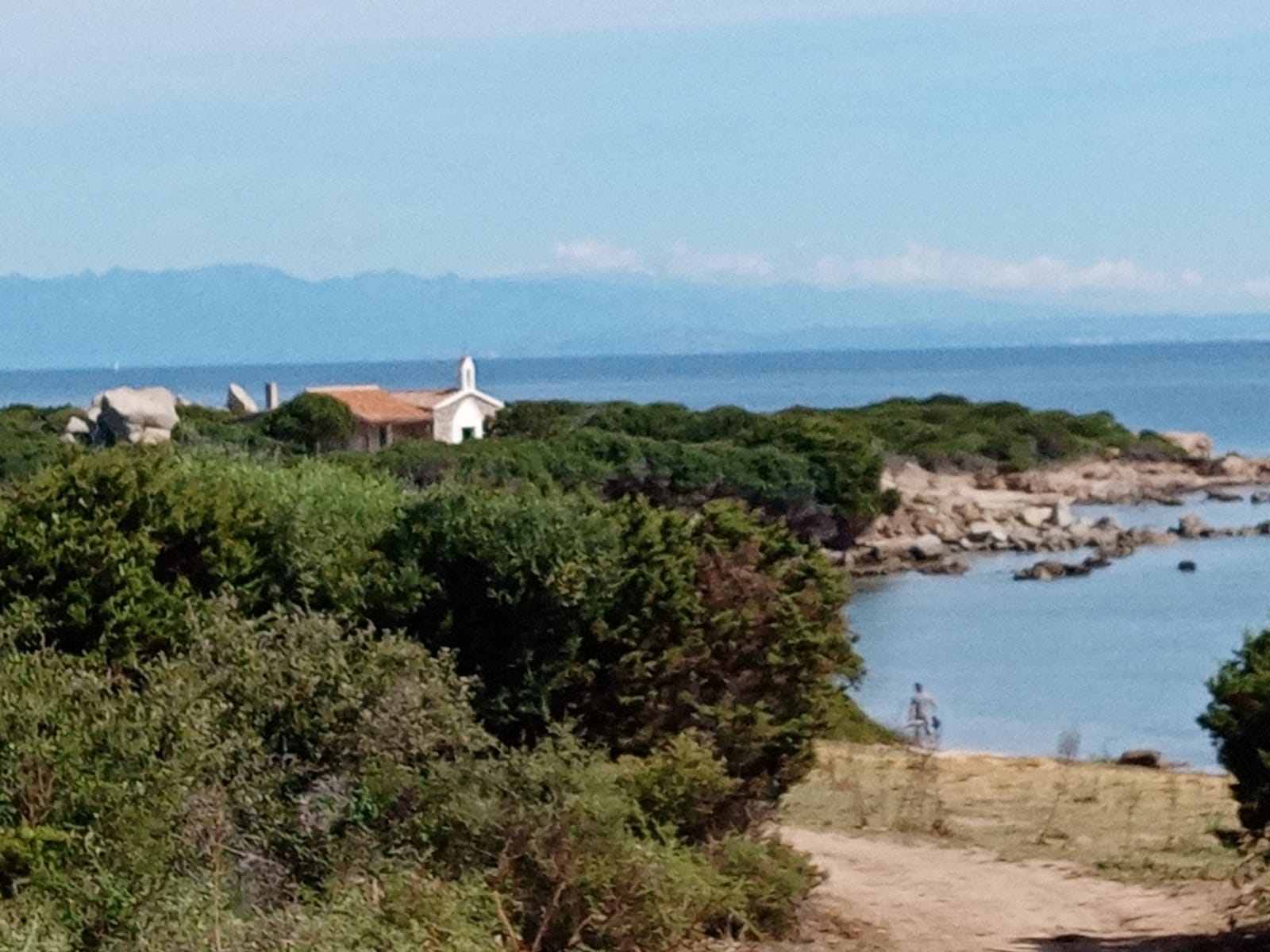 The Church of San Silverio is located at Punta di Li Francesi, between Vignola mare and Portobello di Gallura, built in 1939 with the contribution of humble offerings from local people and Ponza fishermen, devoted to their patron saint San Silverio. The Church, in its architectural simplicity, encapsulates the history of a bond of solidarity between local agro-pastoral communities and Ponza fishermen.
Between 1900 and 1950, fishermen from Ponza reached the sea of Vignola with their boats, which they frequented during the lobster fishing season, adapting to conditions of sacrifice and renunciation during their stay. Initially, there was a commercial relationship with the local inhabitants; some shepherds came from Aglientu to sell or barter their local products in exchange for fish.
The owners of the land on which the church stands, Rosa Mannoni and Antonio Peru, formed a bond of friendship with the fishermen. Understanding their difficulties, they became promoters for the construction of a church that would be close to their boats.
The Church became a meeting place for religious rites where the confirmations of Ponza youths who had not yet received the sacrament could be celebrated, and the local inhabitants acted as godparents.
Inside, it houses the statue of Saint San Silverio brought as a gift by the fishermen from Ponza. The devotion to the Saint and the traditional feast that occurs on June 20th has been handed down to the present day.
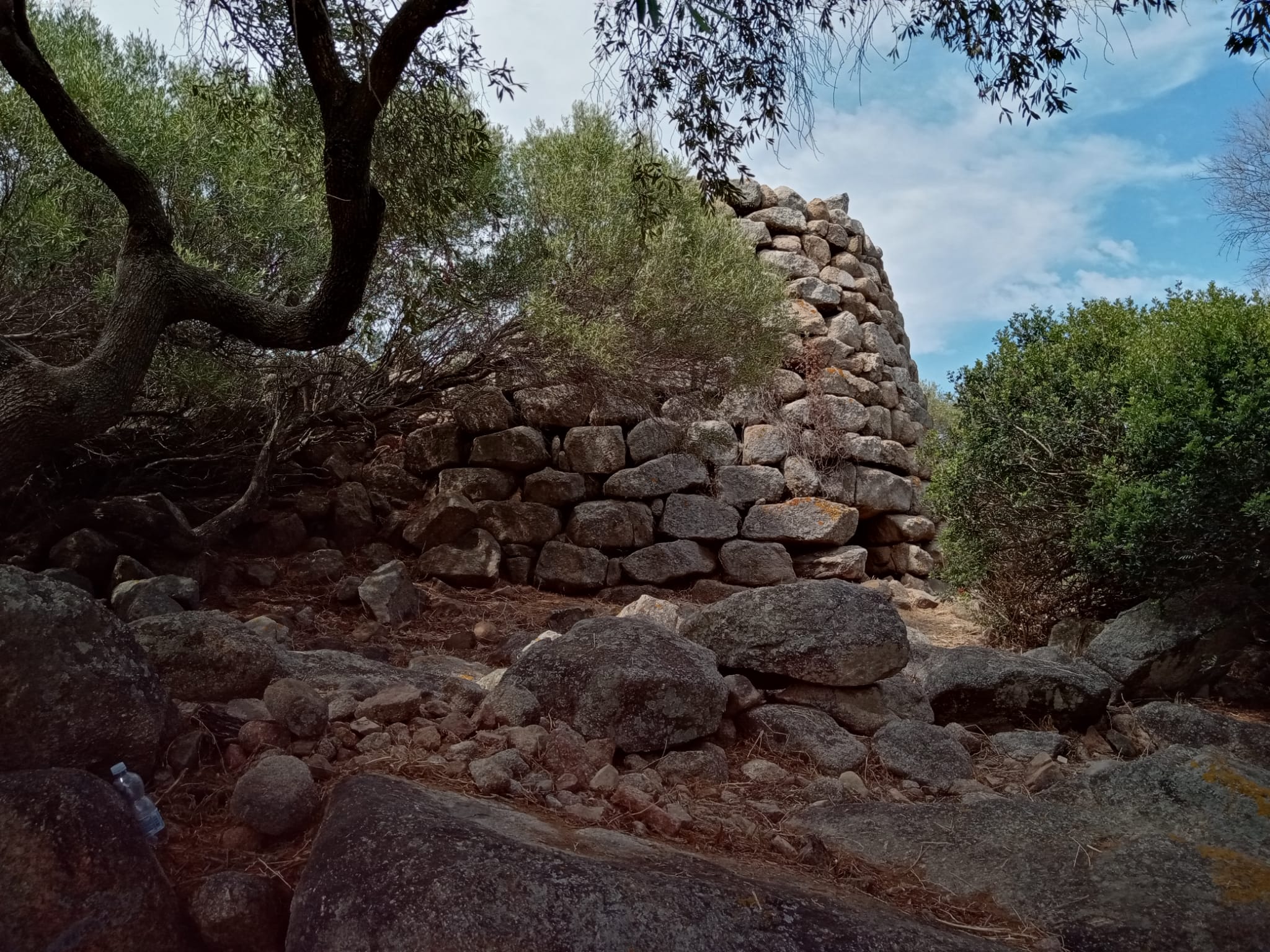 In the territory of Aglientu, there are significant traces of settlements dating back to the Bronze Age, starting from the 16th century BC.
The Tuttusoni nuraghe is better preserved along with the Finucchjaglia Nuraghe. It is located not far from the sea on a slight rise in a flat area submerged by dense spontaneous vegetation consisting of low scrub, wild olive, phillyrea, mastic, myrtle, and cistus. Its construction dates back to the Bronze Age, dated 1800-600 BC.
Its peculiarity is the presence of a central Tholos (false dome), its height is 6.15 m, width 13.5 m, the height of the entrance is 1 meter, and the width of the entrance is 1.5 m, built entirely in granite, with very large irregular ashlars.
The regularity of the masonry texture is unusual for granite constructions of the time, which preferred to use blocks with irregular surfaces that do not allow for the regularity of the courses.
The entrance of the tower is oriented to the South-East. It is a building with a circular plan and truncated conical elevation, featuring an internal and an external lintel, the latter being broken.
Beyond the entrance on the left side, there was a staircase that originally must have led above the tholos, whose steps are no longer visible, while on the right, the corridor ends with a niche. The central chamber is preserved to a height of about 6 meters, originally covered with a tholos, is largely obstructed by the collapse of the vault and consists of at least two architraved niches.


 e poi
e poi