


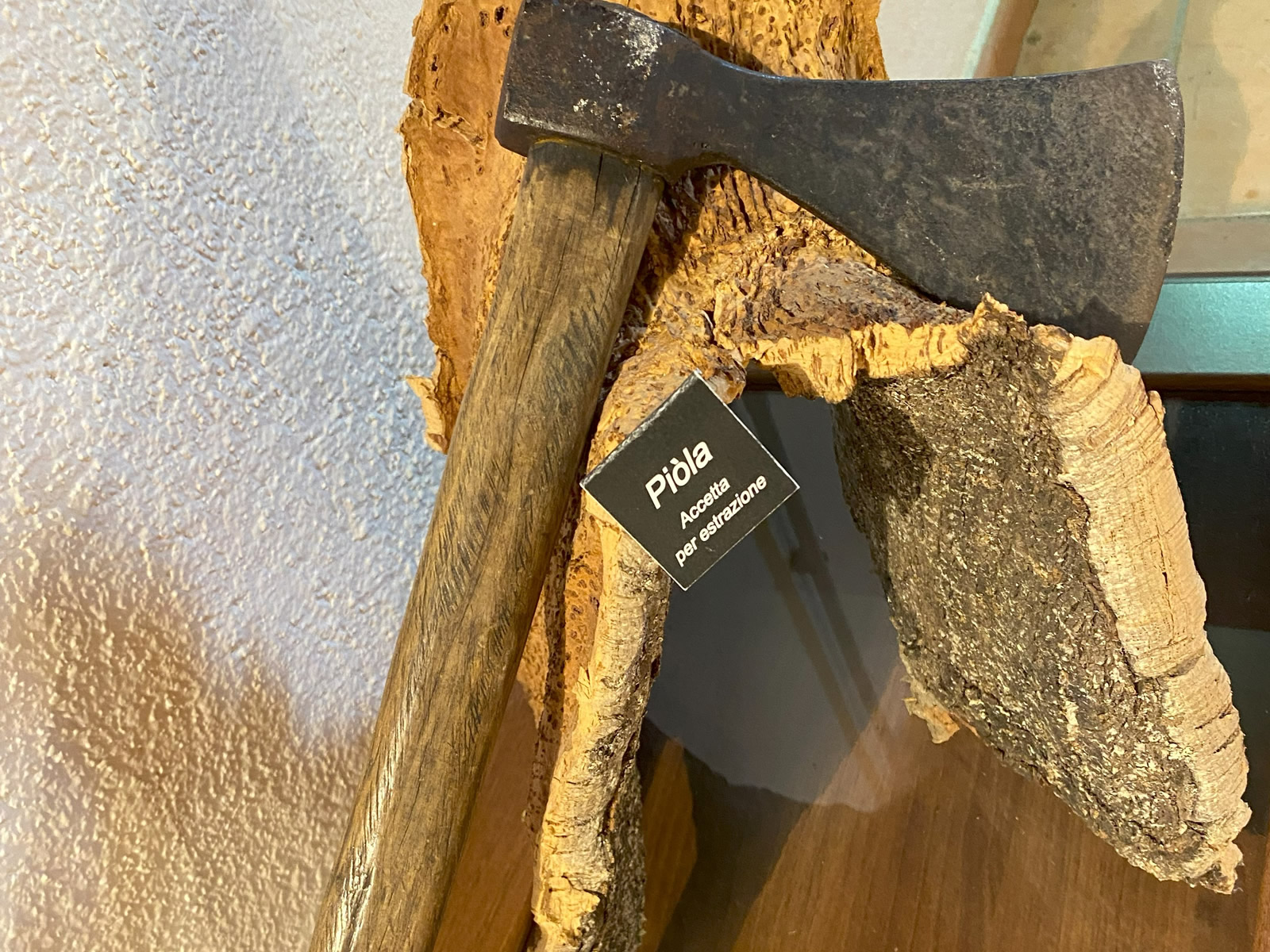
 The hatchet is the only tool used by workers specialized in cork extraction, who are called extractors or, more commonly, bark strippers, in Gallurese Li Bucadori. A figure rich in history and tradition, never replaced by advancing technology.
Each extractor has their preferred and personal hatchet, almost always handcrafted and jealously guarded. Each of them usually works in pairs, which must be perfectly synchronized and in tune.
From this point on, they move into action. Positioning themselves on opposite sides of the oak tree, the ‘Bucadori’ make several extremely precise cuts at strategic points on the trunk. In particular, they first make a horizontal cut along the entire circumference at a precise height between 1.5 and 2–3 meters, called the ‘corona’ or ‘collana’ (crown or necklace).
A meticulous cut, done well only if it has a certain inclination with respect to the vertical of the tree, if it follows a straight line, and if its surface is clean and smooth.
But above all, a cut that highlights and enhances the experience and skill of each bark stripper compared to their colleagues.
Following the entire vertical of the plant and tracing the different portions of bark to be extracted, called planks, the other cuts are named openings or rulers.
Not by chance, the bark strippers must try to act by imparting a certain force to the hatchet, with precise sensitivity, in order to avoid damaging the layer underneath the cork, the so-called phellogen, fundamental for the life of the cork oak. (1591) Source: Sadenda
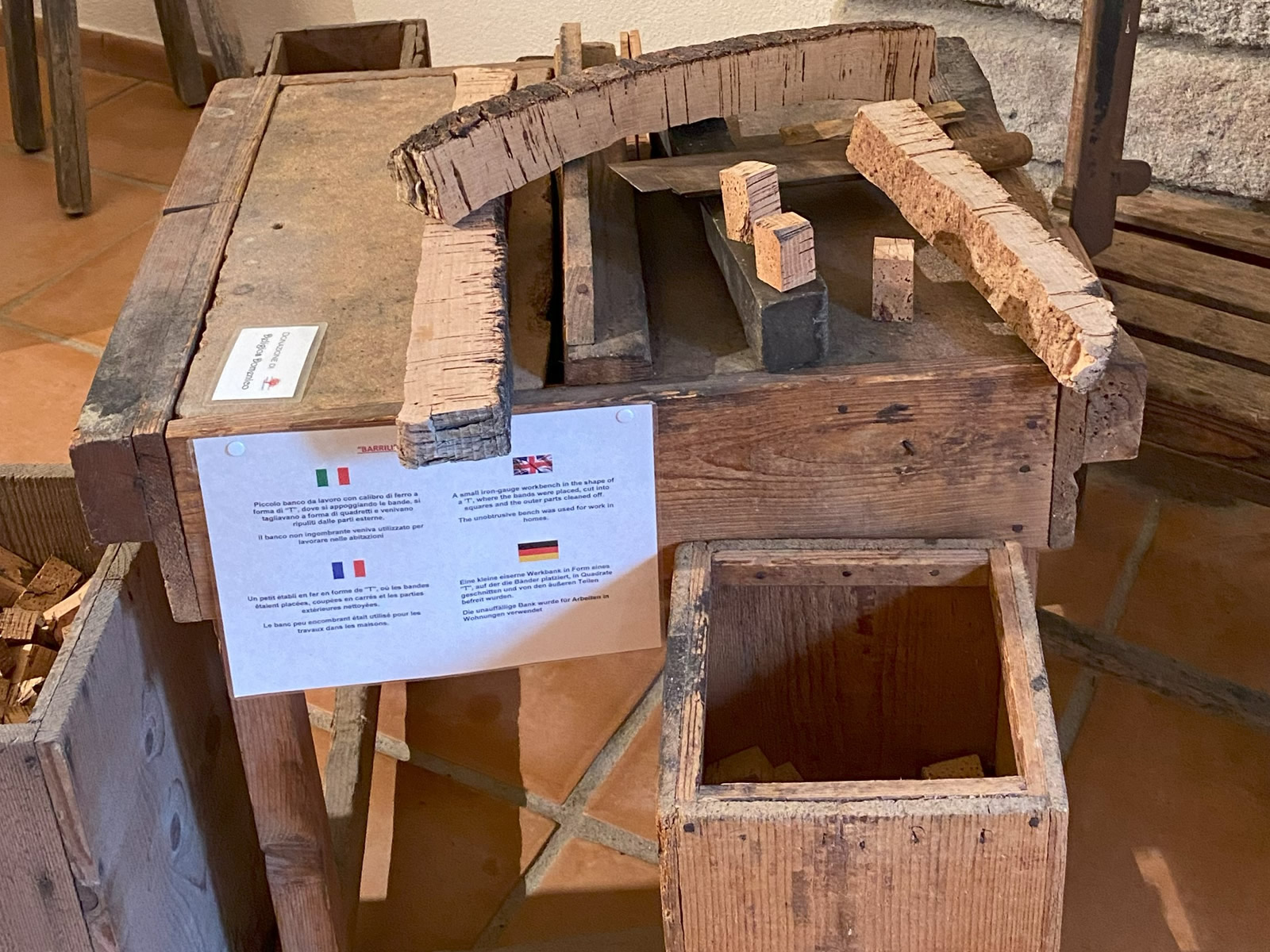 Ancient workbench of the ‘square maker’ on which cork strips were placed and cut to produce squares. The squares were made by eye without measurements and were more or less always the same.
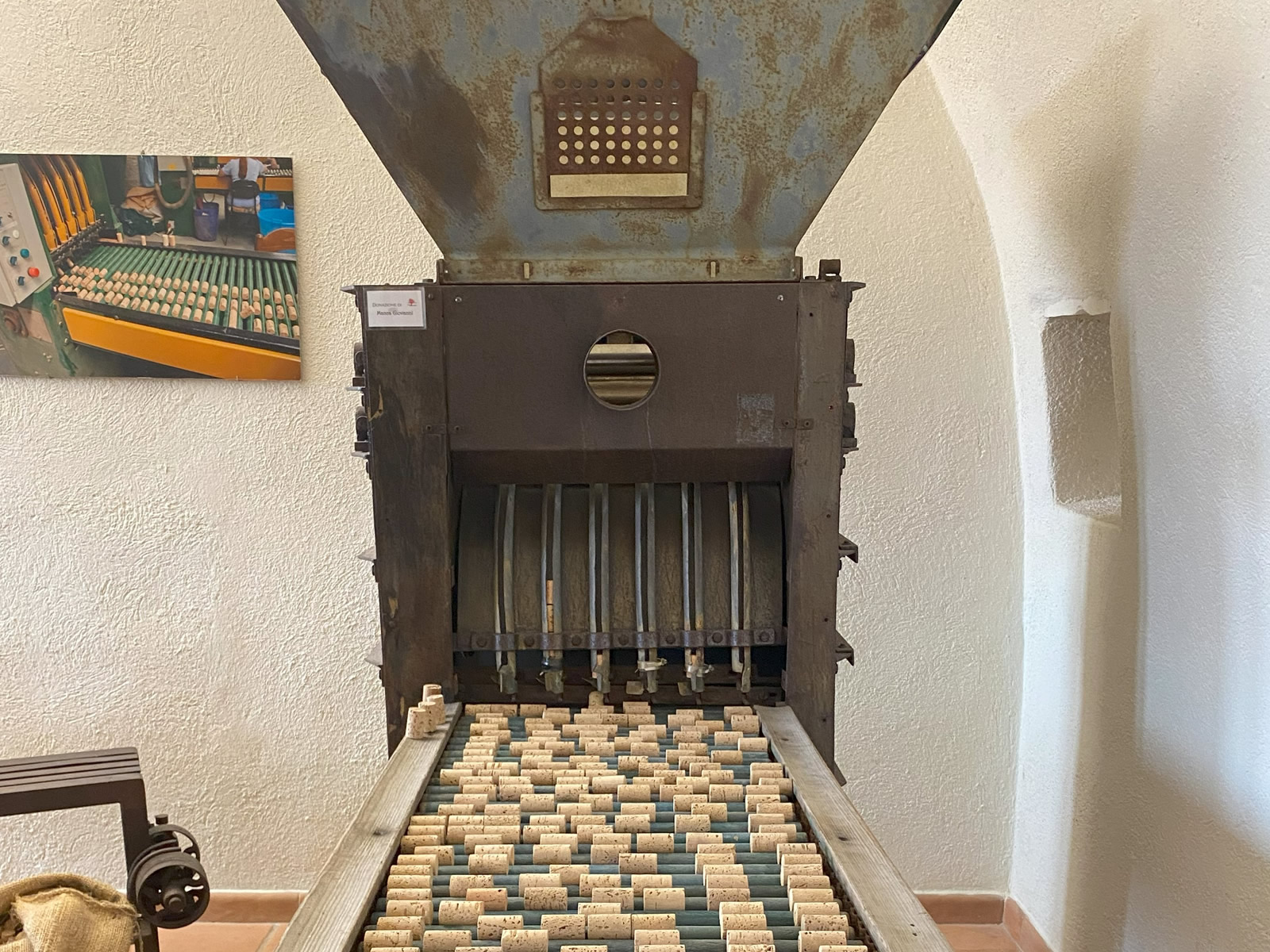 Machinery used for the selection of corks which, while rotating and sliding between the rollers, are chosen by the operator according to the quality desired.
This is the last phase of cork processing.



 e poi
e poi