
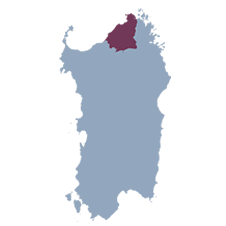


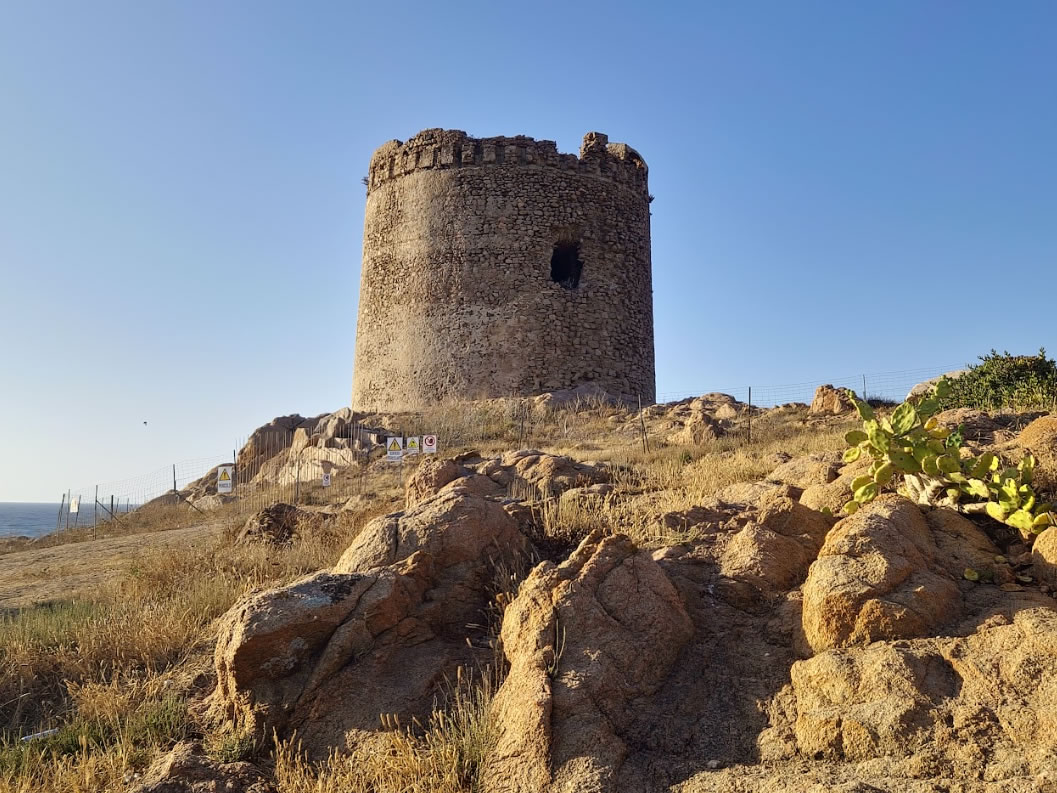
The coastal Tower of Isola Rossa takes its name from the small seaside village where it is located, in the territory of Trinità d’Agultu and Vignola.
It was built at the end of the 16th century to defend the coast from incursions by Saracen pirates and Barbary corsairs. During the Savoy and Austrian domination, it served to limit smuggling between Sardinia and Corsica. Over the centuries, it was also witness to some important historical events.
The Tower is easily accessible on foot through a path from Via Marinedda; although it can only be visited from the outside, it is highly attractive to visitors due to its imposing presence.
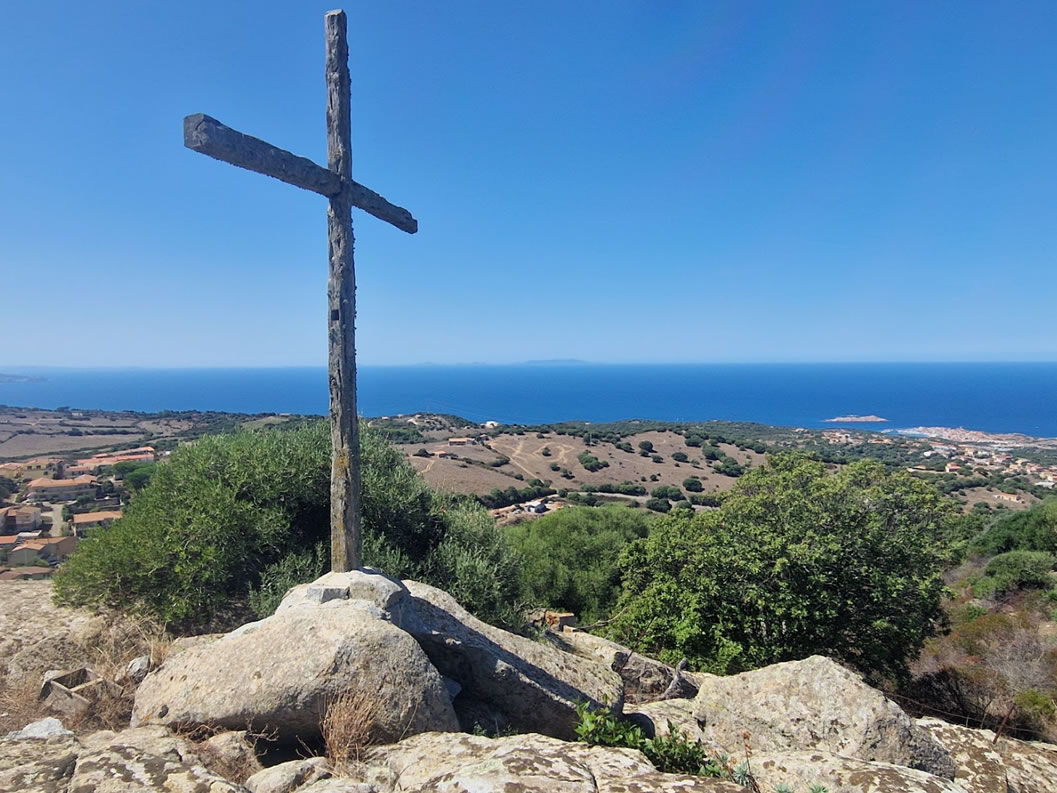
Mount La Frisaia, located at 422.4 m above sea level, overlooks and protects the inhabited center of Trinità d’Agultu.
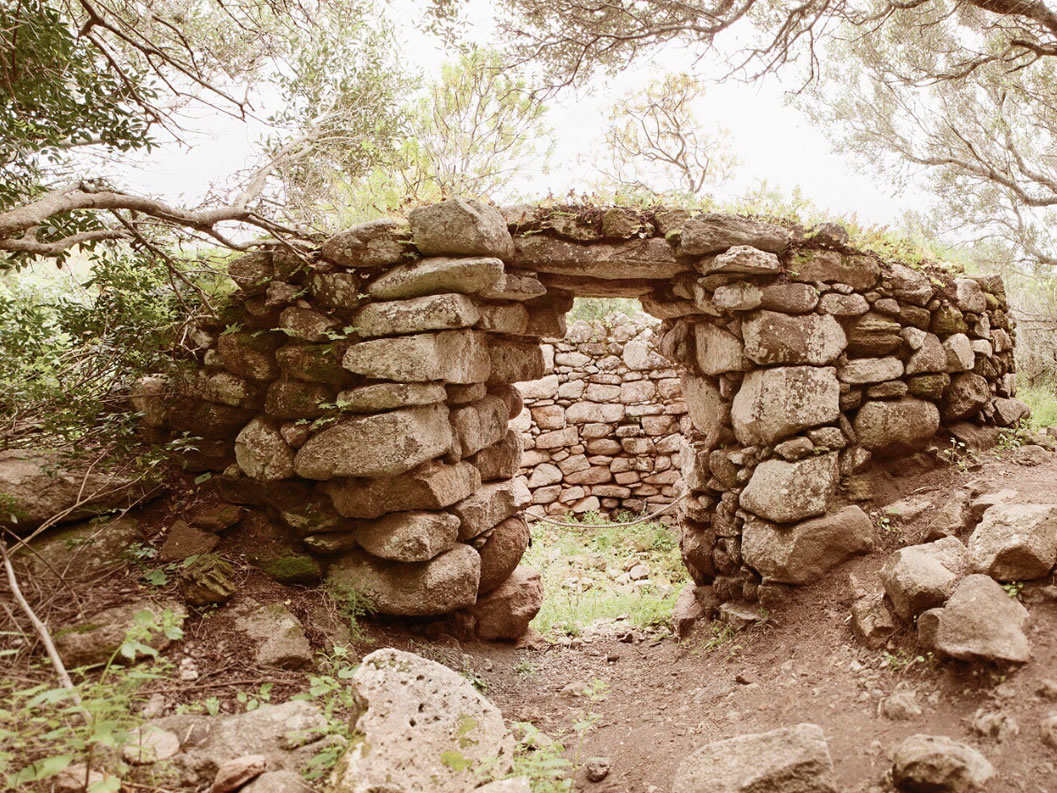
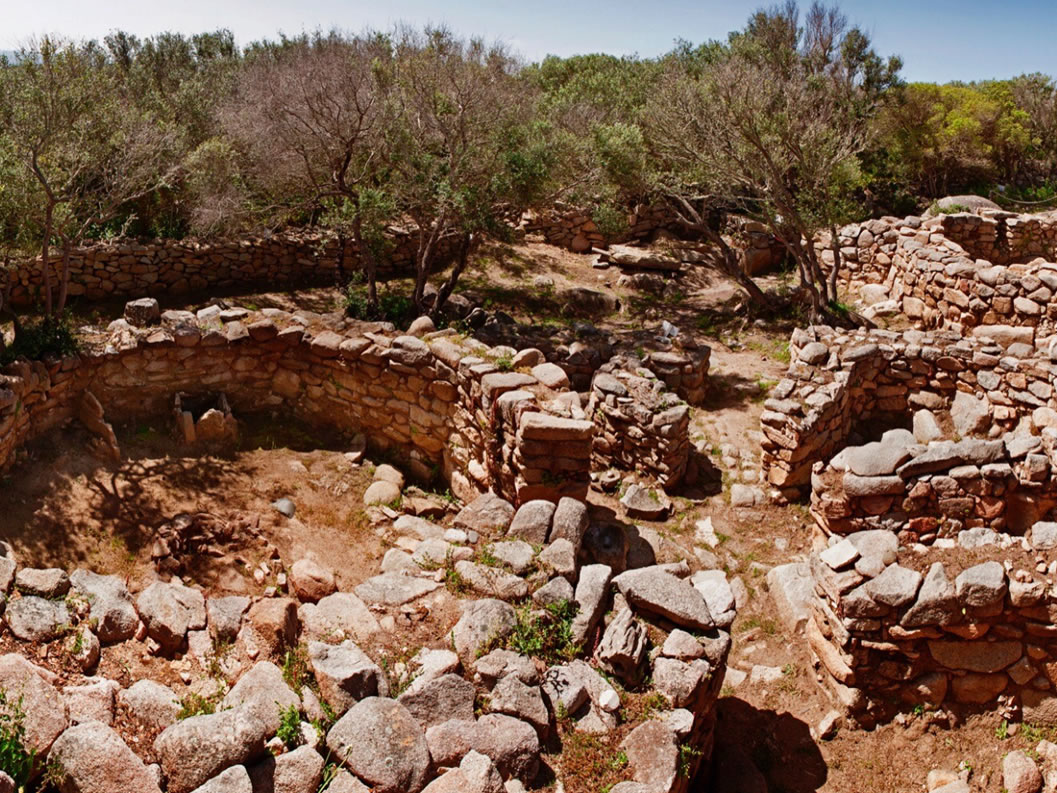
It is a site of considerable interest due to numerous artifacts found there which, when examined by experts, were found to belong to three different eras: ceramic and lithic fragments from the Nuragic period and various types of terracotta shards dating back to the Roman and medieval periods.
These artifacts would testify that the hill was steadily frequented for at least two thousand consecutive years, probably until the mid-14th century, when the great Black Plague depopulated the villages of Gallura.
Over time, this height has been a destination for walks and games, especially for children of past generations.
In November and December 1948, Mr. Cau and Mr. Grillo from the Casa di Sassari came to Trinità d’Agultu to preach the traditional Popular Missions, which were extraordinary preaching courses instituted by Saint Vincent de Paul (✝1660), aimed at galvanizing the Christianity of the faithful in a particular parish. The two missionaries also preached in Paduledda, La Scalitta, and San Michele, and were very successful as they managed to bring 120 men to the Sacraments. A wooden cross was erected on the mountain in memory of the Mission.
The name of the mountain has given the title to the periodical magazine La Frisaia, first published in April 1987, which arose from the desire of Don Gianni Sini, the parish priest of Trinità at the time, to publish a local newspaper that would report, in addition to religious events, the history, habits, and culture of the area. The magazine is still published today and over the years, both professional journalists and amateur authors, along with school children, have alternately contributed to it.
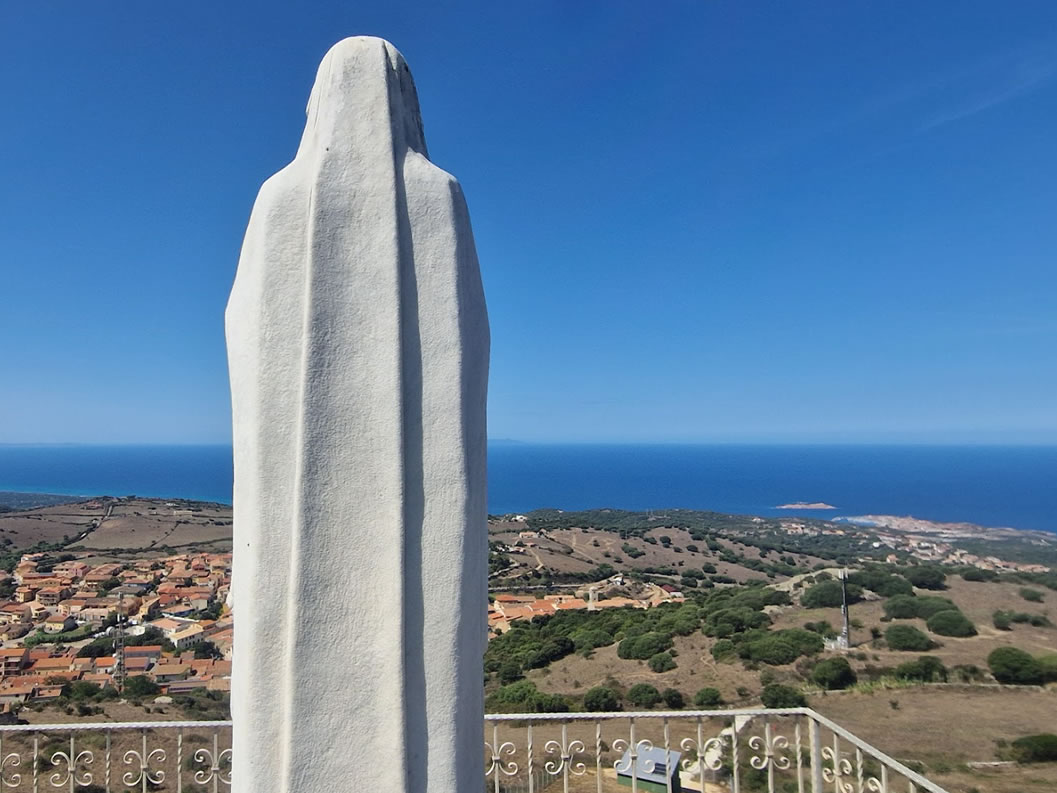
On the occasion of the centenary of the dogma of the Immaculate Conception, proclaimed by Pope Pius IX on December 8, 1854, the statue of the Madonna was commissioned and placed on Mount Santa Barbara on March 20, 1955, to protect the village. That day was a wonderful celebration and the entire community took part in the solemn procession of the statue, carried by the parish priest Don Derosas on an ox-drawn cart decorated for the occasion and accompanied by many other carts transporting women and children up the steep climb. Later, the municipal administration equipped the statue with lighting to make it visible at night as well.
In 1996, a committee of volunteers was formed to raise the necessary funds to purchase a new statue to be installed in place of the original one, which had deteriorated over time. An important contribution also came from the painting master Reza Kaveh, who offered a large part of the proceeds from the sale of his paintings exhibited in the town’s social center.
The current white marble statue, 1.80 meters tall, created by sculptor Dino Felici (✽1931 – ✝2002) from Carrara, was placed on the summit of the mountain and blessed with great celebration for the entire population in the last days of May 1997.
The presence of the Virgin has always been particularly felt by the community and still represents one of the symbols of Trinità d’Agultu today.
Over the years, it has been the destination of easy excursions for many children as well as numerous visitors. The point where it is located, in fact, offers a spectacular panoramic view of the entire inhabited center and a wide stretch of coastline.


 e poi
e poi