


Home » Coastal Towers
Coastal Towers
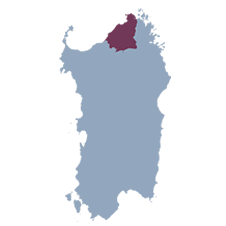
The itinerary will guide us to discover the three main Aragonese towers in Gallura, crossing a vast territory that starts from Santa Teresa Gallura, in the extreme north of Sardinia, up to Isola Rossa, a seaside resort in the municipality of Trinità d’Agultu e Vignola. Before illustrating the actual itinerary, it will be useful for the visitor to learn some general information about these architectural structures, framing them in their historical context. The coastal towers dominate the entire Sardinian coastline and are a characteristic of the coastal landscape. Their construction dates back mainly to the period of Spanish domination, which lasted from 1479 to 1713. In the first half of the 16th century, pirate raids on the coasts of Sardinia, southern Italy, and Spain multiplied. Its central and strategic position in the Mediterranean had made Sardinia a coveted possession since ancient times, and during the 16th and 17th centuries, it was hit by conflicts, famines, plagues, wars, economic crises, and pirate raids. In 1582, King Philip II established the Royal Administration of Towers, which designed and built new coastal towers for spotting and signaling sea incursions. The Sardinian coasts were now depopulated due to continuous attacks, and within two decades, the coastal defense network was built, which continued to be implemented throughout the 1600s. The last raid on the coasts of Sardinia took place in 1815, and the towers were significantly weakened, and funds for their maintenance were cut until, in 1843, Carlo Alberto of Savoy put an end to the Royal Administration of Towers. Some of them were used until World War II and were decommissioned as a defense system only in 1989.
The Itinerary: from Santa Teresa to Isola Rossa
1-The Tower of Longonsardo
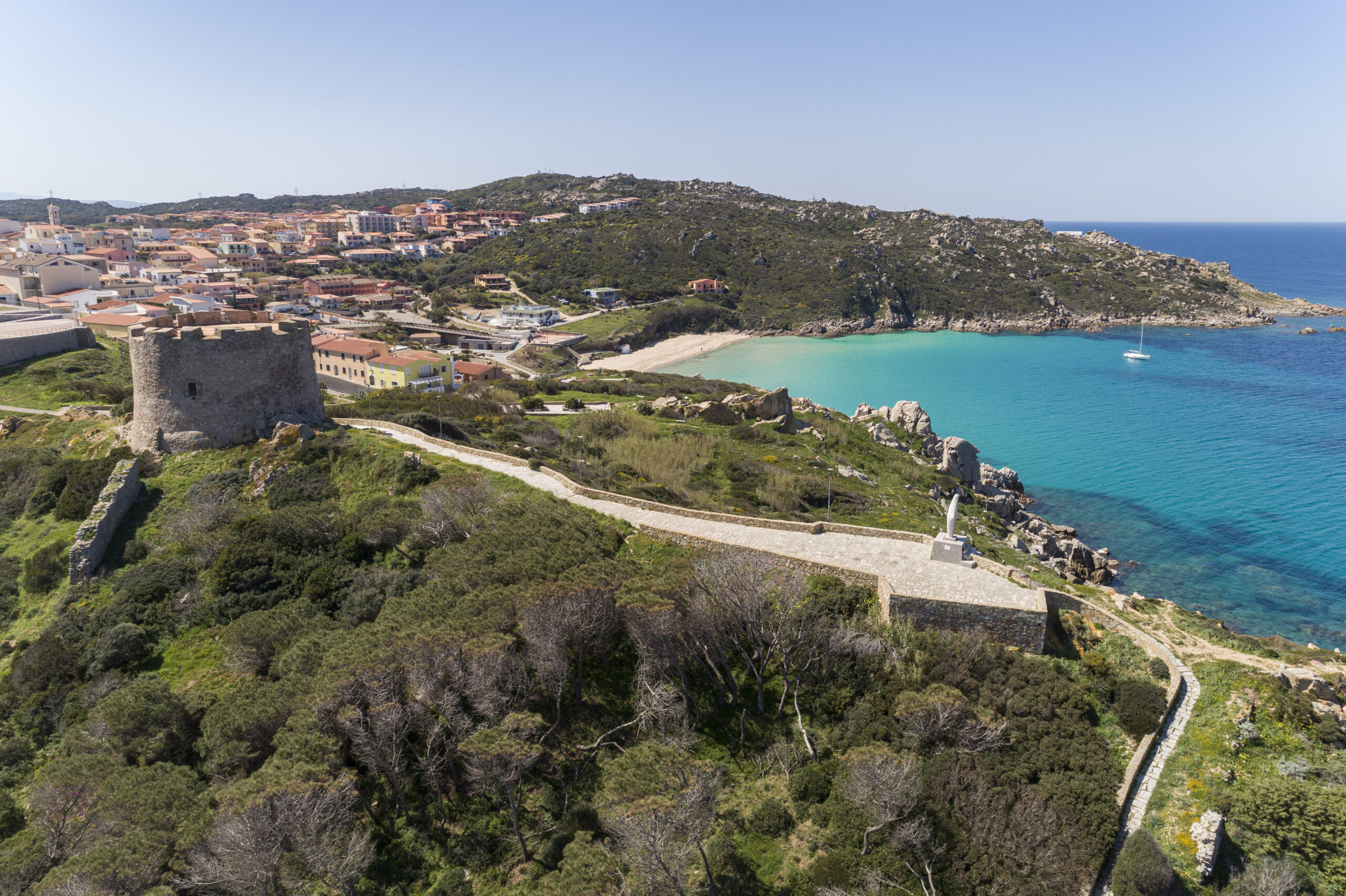
The first stop on our itinerary is the Tower of Longonsardo, which overlooks the Strait of Bonifacio. It is located at the extreme northern edge of the town of Santa Teresa Gallura, on a promontory, not far from where a castle stood in medieval times, and is probably one of the most impressive ever built by the Spanish crown on the island. Built with granite blocks, the Longosardo tower has a diameter of about 19 meters and an area of 285 square meters. It is 11 meters high on the rock and rises 6 meters from the ground on the side opposite the sea. From the top of the terrace, you can enjoy a beautiful panorama and admire the nearby Strait of Bonifacio. The best time to take suggestive photos is definitely at sunset, when the sun descends beyond the promontory of Capo Testa and tinges the white cliffs of Corsica with warm tones. The Longonsardo tower can be visited every day from April 1st to October 31st, from 10:00 AM to 1:00 PM and from 3:30 PM to 5:30 PM: visitors can purchase the entrance ticket with a free visit by downloading the QR code. A brochure is provided in Italian, English, French, German, and Spanish.
2-From the Tower of Santa Teresa to that of Vignola
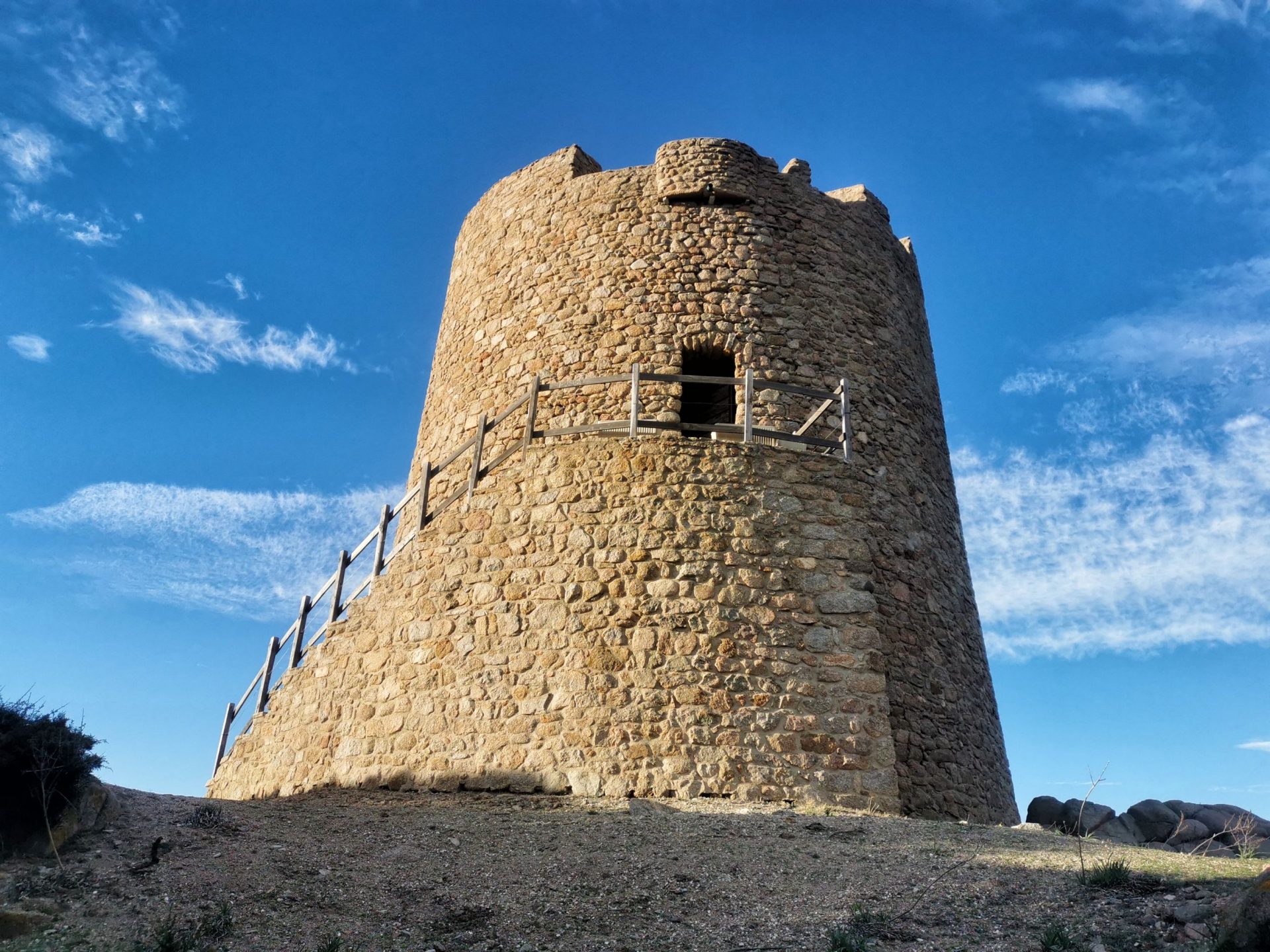
We leave Santa Teresa Gallura and continue on the coastal road heading west. Along the way, we will pass through several coastal locations; the landscape is characterized by the typical Mediterranean scrub and the granite rocks of Gallura. We reach the parking area of San Silverio beach, after a 15-minute walk, surrounded by lush Mediterranean vegetation and the characteristic scent of juniper, we reach the tower, which stands 25 meters above sea level on a promontory between the tourist villages of Vignola Mare and Portobello di Gallura. Built in the 17th century at the behest of King Philip II, the Vignola tower was part of a complex of fortified structures, designed along the coast of Sardinia with the aim of defending, spotting, and communicating threats of incursions from the sea to other watchtowers. According to some documents, the construction of the monument dates back to 1606. The tower, made of irregular granite ashlars, has a truncated conical shape and reaches 12 meters in height. During World War II, the tower was part of the sea surveillance and control system, as a coastal observation point. The tower, renovated and easily accessible, offers the spectacle of a breathtaking panorama with views spanning along the coast you have just traveled by car: you will recognize the promontory of Capo Testa, that of Monti Russu, and the ever-present (unless foggy) cliffs of Bonifacio. But from the tower, it is also possible to see the jagged green and rocky landscape of inland Gallura. There is an explanatory panel in Italian and English, which provides all the most important information about the monument which, unlike that of Santa Teresa, is not managed. Entry is therefore free and without charge.
3-From the Tower of Vignola to that of Isola Rossa
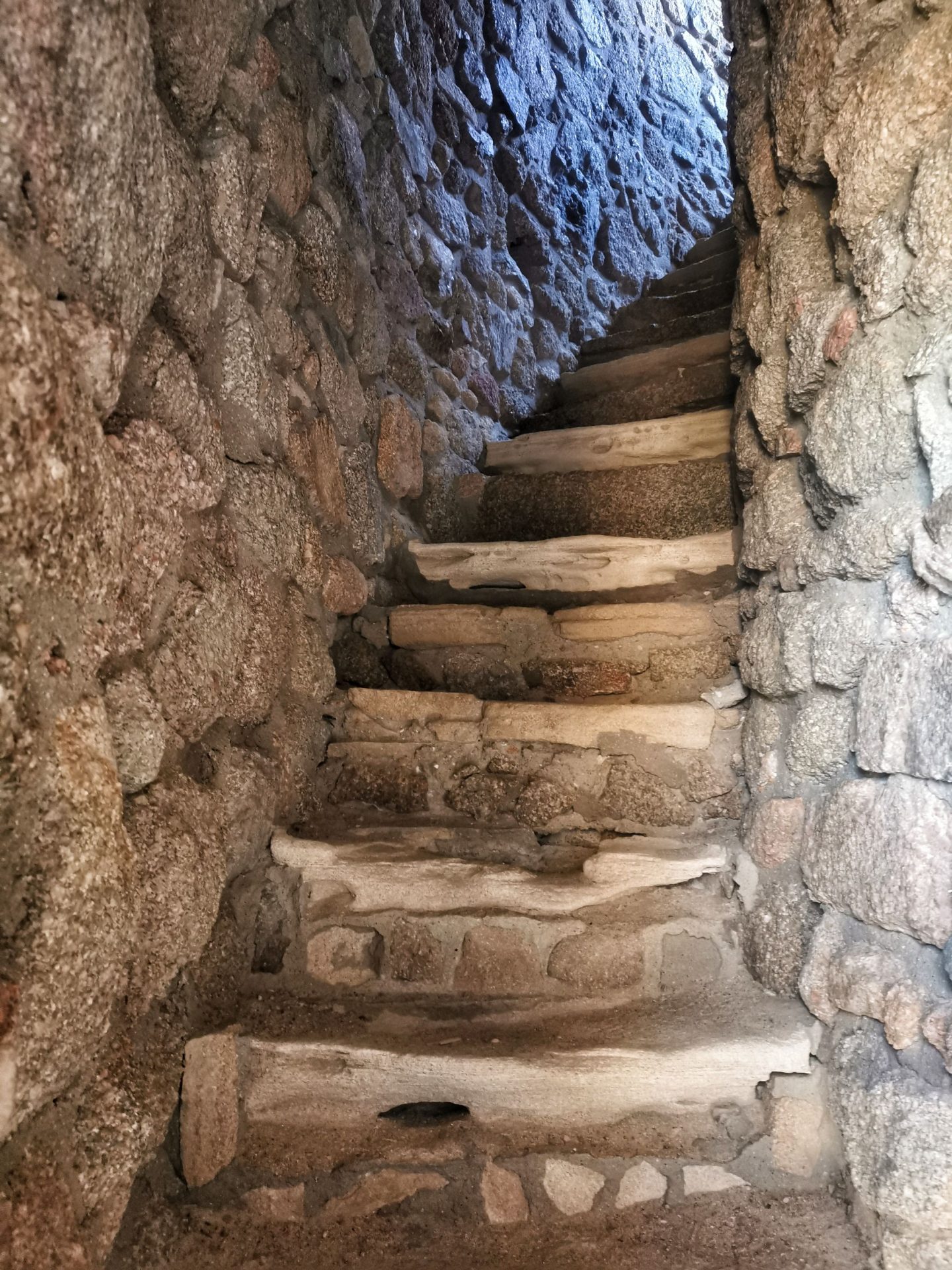
The watchtower of Isola Rossa, also known as the Spanish tower, is located in the small seaside village of Isola Rossa, a hamlet of the municipality of Trinità d’Agultu e Vignola. It is part of the system of watchtowers and defense, mostly built between the mid-1300s and the late 1500s, to try to remedy the continuous incursions by Saracen pirates first and Barbary corsairs later. Its erection, already planned in 1578, was probably completed between 1590 and 1595. The Tower of Isola Rossa is situated on a rocky spur about 35 meters above sea level. The structure is made of irregular ashlars of local reddish granite arranged in rows, held together by lime mortar, mixed with sand and seawater. It has a truncated conical shape (the most common form among the numerous towers, as it is similar to that of nuraghi and therefore more easily camouflaged), with a base diameter of about 14 meters and a height of 12 meters. It is hypothesized that access was via a rope ladder with wooden rungs, which could be removed to ensure greater security to the post. Inside, the tower is divided into two floors with a terrace. Thanks to its strategic position, the tower could control a wide stretch of sea between Castelsardo and Trinità. It can be assumed that over time it was used as a health outpost and certainly during the Austrian and Savoyard period it was a valid tool for controlling smuggling between Sardinia and nearby Corsica. The tower went out of service in 1846, four years after the suppression of the Royal Administration of Towers.

 e poi
e poi